They laughed at her.
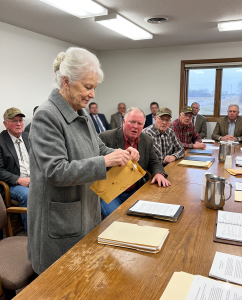
It happened thirty years ago in a conference room just off Route 56 outside Dodge City, in the kind of low, stale building where men drank burnt coffee from foam cups and made life-changing decisions with their hats still on. There were twelve of them that morning, most wearing bolo ties or seed-company caps, all of them comfortable in that peculiar way men are when they have spent too many years around the same table telling themselves they are the ones who matter.
Across from them sat Marvella Jean Holt.
She was fifty years old then, freshly widowed, wearing a gray wool coat because the Kansas wind had a bite to it that week and because she had not yet learned how to dress for legal humiliation. In her lap she held an old envelope and a folder of papers that had belonged to her husband, Darrell. The papers were clean, organized, carefully clipped together. Darrell had always believed that if a thing mattered, you kept the records straight.
He had believed the Cimarron Plains Grain Cooperative mattered.
He had believed in it the same way he believed in rain after a long dry spell—fiercely, stubbornly, perhaps more than the evidence justified.
The co-op had been founded by local farming families decades earlier. It was supposed to be a shield against bad markets and worse middlemen. A way for people like Darrell Holt to have a stake in where their grain went and how they were treated. He had spoken of it with reverence. The Holts weren’t just members. They were founding-family shareholders.
At least, that was what the papers said.
The lawyer at the far end of the conference table adjusted his glasses and explained, in a voice polished smooth by practice, that the Holt shares had lapsed.
The paperwork, he said, had not been filed correctly.
There might have been a technical defect.
Perhaps Darrell had misunderstood a deadline.
Perhaps the office had sent notices that were overlooked.
Marvella listened without blinking.
When he finished, she asked one question.
“What does that mean?”
It means, he replied, that the certificates have no present value.
His tone softened after that, but not with kindness. It softened the way people do when they have already taken something from you and would like credit for sounding gentle while they do it.
She could appeal, he told her.
Of course she could.
But in all honesty, ma’am, it would probably cost more in attorney’s fees than these certificates are worth.
Then someone laughed.
It came from halfway down the table. Just a short burst, almost involuntary, as if the idea of this woman fighting back was too absurd to sit quietly with. Another man grinned. Then another. Within seconds the room had tipped. Not into chaos, not into overt cruelty, but into something colder: shared contempt.
Marvella looked down at the envelope they had pushed back across the table.
She could still remember the exact hand that slid it toward her.
A thick-knuckled hand, tan from fieldwork, wearing a wedding ring and a watch too expensive for a man who wanted to be mistaken for simple. The gesture was casual. Final. The kind of motion people make when returning a receipt after telling you the warranty doesn’t apply.
Marvella picked it up, tucked it into the inside pocket of her coat, and stood.
No tears. No shaking voice. No last, desperate plea on behalf of the dead husband who had trusted these men.
“Thank you for your time,” she said.
The words landed in the room wrong. Too calm. Too level.
One of the men stopped smiling.
Then she walked out.
By lunch, nobody in that room was thinking about her anymore.
That was their first mistake.
Marvella had been raised in a farmhouse where survival was not considered dramatic enough to mention. The windows rattled all winter, and her grandmother stuffed newspaper into the cracks to keep out the wind. The women in her family did not waste things—food, money, useful objects, information, anger. Her mother canned green beans, peaches, tomatoes, and broth. She saved rubber bands in a coffee tin and old envelopes in a kitchen drawer because paper could always be used again.
When Marvella was a girl, her grandmother used to say, “The land punishes pride first.”
She never forgot that.
At twenty-two, she married Darrell Holt. He was broad-shouldered, sun-browned, and steadier than most men his age. He was not flashy. He was not the kind to charm a room. But he loved the land as if it were a duty and a privilege at once. Marvella understood that kind of love.
They built their life in the old, grinding way.
There were no shortcuts.
They expanded cautiously. They repaired machinery instead of replacing it. They weathered years when wheat prices slumped so low that every bill paid felt like a minor miracle. Once, hail shredded a promising crop in less than fifteen minutes. Another year, drought hardened the soil to something close to brick.
Still, they kept going.
They raised three children. They paid down debt. They learned to trust their own judgment. And through all of it, Darrell remained loyal to the cooperative. He served on committees. He attended annual meetings. He kept membership papers in a labeled folder. He believed rules mattered because he believed institutions, if built by neighbors, could still be honorable.
Then he died at fifty-one.
A heart attack took him in the machine shed before the ambulance could get there.
After the casseroles stopped coming and the condolences thinned into absence, Marvella sat at the kitchen table and sorted through his records. She found the co-op documents. She found correspondence. She found notes in Darrell’s own hand about share classes and transfer rights. There were enough details to make her think the lawyer must be wrong.
But she was not a lawyer. She was a widow with farmland, grief, and three adult children who had their own lives. So she did what practical people do. She asked questions. She went to the office. She took the papers in. And she was dismissed by men who thought technical language could bury anything.
Marvella did not hire an attorney.
She did not appeal.
At least, not in the way they expected.
Instead, she went home and placed the envelope in a drawer. That evening her daughter, Luanne, asked what had happened.
“Nothing useful,” Marvella said.
A few years later, when the envelope had moved from drawer to purse to coat pocket and seemed to accompany her everywhere, Luanne asked what was inside.
“Insurance,” Marvella replied.
Her son Mitch once asked why she never opened it.
“I’ll open it when the time is right.”
He laughed a little when she said that, thinking it was one of her odd sayings.
It wasn’t.
The years that followed were quiet on the surface. Marvella paid off the remaining debt on the Holt land. She learned the business end of everything Darrell had once handled. She watched markets. She adjusted planting decisions. She negotiated with suppliers who first assumed they could talk past her and quickly learned they could not.
Then an opportunity appeared.
Earl Dinkins, who farmed the eighty acres bordering her west line, had bad knees and two sons who wanted no part of agriculture. Earl lasted longer than his body should have allowed, but eventually he decided to sell. Bigger operators circled. So did a local banker’s brother-in-law, who assumed Marvella would never bid aggressively.
She bought the land outright.
Not long after that, she purchased the Renfrow parcel.
Then came a narrow drainage easement others dismissed as worthless. The comments around town were predictable. Marvella Holt was buying odd pieces. Sentimental purchases. Widow’s mistakes.
Three years later the county ran an access road through adjoining land, and that “worthless” strip became strategically useful in ways that made several men furious.
Marvella said nothing.
She went on reading.
Public cooperative financial filings are available in Kansas, but most people never examine them unless they are paid to. The documents are dry, repetitive, and full of language designed to reward concentration while punishing curiosity. Marvella sat at her kitchen table with a lamp, a pencil, and reading glasses and went through every filing the Cimarron Plains Grain Cooperative made.
She tracked debt.
She noted refinancing dates.
She wrote down the names of lenders.
She saw elevator assets sold off, one by one, always accompanied by explanations that sounded temporary and prudent and never quite rang true. She saw short-term fixes presented as strategic realignment. She saw confidence where she expected caution, and bravado where she expected transparency.
Most importantly, she began to understand something the men in that conference room had missed.
They were not careful.
Not really.
They were merely accustomed to not being challenged.
Marvella began making calls.
Old members. Retired farmers. Widows. Children cleaning out houses after funerals. Anyone with a connection to the co-op’s founding years. She would ask if they still had their original share certificates. Often there would be a pause, then a laugh.
Those old things? someone would say.
Some still had them in shoeboxes under beds. Some were folded inside family Bibles. Some had been tucked into desk drawers with land abstracts and old insurance policies. Most people had been told, one way or another, that the certificates had no real value.
Marvella would say, “I’ll take them off your hands.”
“For what?”
“For what they’re worth, according to the co-op.”
That answer usually brought another laugh.
“Nothing?”
“That’s what they told us, didn’t they?”
Sometimes she paid exactly that and the other party insisted it was fair. Sometimes she quietly added a little money because she knew what it felt like to be cheated and then told to be grateful for the explanation. She made sure transfers were documented. She kept copies. She filed everything. She learned which signatures needed witnesses and which needed notaries. She missed nothing.
Year after year, she accumulated certificates.
Not enough at first to matter. Then enough to notice, if anyone had bothered noticing. Then more than enough to frighten the right person—if the right person had been paying attention.
But nobody was.
In town, Marvella became one of those women who are simultaneously respected and underestimated. She brought casseroles to funerals. She attended church irregularly but always remembered names. She dressed neatly, spoke plainly, and never advertised her business. At auctions she stood near the back, hands folded over her purse strap, looking less like a buyer than someone waiting for the social part to end.
Men underestimated that look. Men like the comfort of appearances.
The co-op continued along its path, one bad decision layered over another. Drought years squeezed margins. Commodity swings turned ugly. Leadership treated debt like a bridge that never needed an end point. Then private money began to circle. Consultants appeared. There were more closed-door sessions, more reassuring statements to the community, more emphasis on resilience and modernization.
Marvella read all of it.
By the time the sale rumors became official, she already knew the shape of the problem better than most board members did.
In April, Cimarron Plains Grain Cooperative announced it would pursue a sale under financial pressure.
The reaction around Dodge City was immediate. Some treated it like tragedy. Others treated it like inevitability. A private equity group out of Dallas, long suspected to be interested, emerged as the likely buyer. The local paper sent a reporter. Lawyers arrived. Men who had spent years pretending the co-op’s condition was manageable suddenly began speaking in the language of emergency.
A buyers’ meeting was set in the old conference room off Route 56.
Marvella chose a gray wool coat.
Not the original, though the style was the same. Deep inside pocket on the left. Sensible shoes. White hair pinned neatly up. She placed the old envelope inside the coat and drove herself.
The room was standing room only when she arrived. Lawyers from Wichita. Investors with polished boots. Local board members. Reporters. A few familiar faces that had aged into softer versions of themselves. She took a seat in the back row and rested the envelope in her hands.
At first, no one recognized her.
Then the attorney stood at the front and began his prepared remarks. He reviewed sale procedures, legal obligations, required consents. It was efficient and dull, right up until he reached the point where he had to identify the majority shareholder whose approval was legally required before any transaction could proceed.
He paused.
Shuffled papers.
Adjusted his glasses.
And said, “The majority shareholder of record is Marvella Jean Holt.”
The room changed.
That was the only way to describe it.
Silence hit first, then the visible ripple of disbelief. Necks turned. Pens stopped moving. A board member muttered, “What?” loud enough for three people to hear. The private equity man from Dallas bent toward his associate but did not speak. He was too busy staring.
In the last row, Marvella met the room with a small, composed smile.
The farmer who had laughed at her in 1994 was there. She knew him immediately. His hair had thinned. His face had thickened. Time had not improved his manners, but shock had emptied them for the moment. He half-rose from his seat as if reflex might save him.
It couldn’t.
The attorney cleared his throat again. “Mrs. Holt has provided documentation of certificate acquisitions and controlling interest.”
The phrase sounded sterile. It did not begin to cover what she had done.
Marvella stood and walked forward.
Every eye followed the old envelope in her hands.
At the table, she laid it down carefully. For thirty years she had kept it sealed. Coffee stains darkened one corner. The paper was soft at the folds from being carried. It looked insignificant, which pleased her.
She slipped a finger under the flap and opened it.
The room held still.
Inside were the documents she had protected all these years: Darrell’s original assignment notes, signed and witnessed; a copy of the founding bylaws with a passage marked; correspondence establishing transfer rights; and the earliest proof that the office had received the Holt paperwork before quietly deciding to treat it otherwise. Not a clerical accident. Not a misunderstanding. A choice.
The attorney read the first pages and lost color.
The man who had laughed looked from the documents to Marvella and back again, as though he were trying to find a version of the world where this was still funny.
There wasn’t one.
“My husband filed what he was told to file,” Marvella said.
Her voice was calm, but it filled the room.
“Your office knew it. You all counted on me not knowing enough to matter.”
Nobody interrupted.
Then she slid forward the ledger she had compiled over three decades. Certificate numbers. dates. transfers. signatures. A map of patience made visible.
The private equity associate asked in a strained whisper, “How many does she control?”
The attorney answered without looking up.
“A clear majority.”
The Dallas people exchanged a glance that had panic in it now, because this was no longer a sale to be negotiated with a desperate board. This was a sale subject to one woman whose memory was longer than any financing timeline in the room.
“There’s an additional instruction,” the attorney said.
He picked up the notarized document clipped behind the ledger. His hand shook slightly as he read.
Marvella had not come to rubber-stamp the sale.
She had conditions.
First, the board chairman who had participated in the 1994 denial was to resign immediately.
Second, any sale would preserve local employee pensions and create a hardship fund for small producers harmed by the co-op’s recent contracting practices.
Third, the sale price would be renegotiated upward to reflect asset valuations that, under scrutiny, had been underestimated.
And fourth—a point that made two men sit down as if their knees had failed them—part of the proceeds would be directed into a trust named for Darrell Holt and the other original founding families whose shares had been dismissed, diluted, or quietly misrepresented over the years.
The room erupted then, not into chaos exactly, but into overlapping outrage, defense, stunned questions, and the desperate rustle of people suddenly discovering that history keeps receipts.
One board member said this was extortion.
Marvella turned to him.
“No,” she said. “This is consent.”
That silenced him.
The chairman, the same man who had once laughed hardest, tried a different angle. He spoke of misunderstandings, of old records, of how unfortunate it was that feelings had become involved.
Marvella looked at him for a long time.
Then she said, “You thought widow meant weak.”
No one in the room moved.
The private equity man asked for a recess. He wanted to confer with counsel. Marvella nodded. Let them confer. Let them calculate. Let them discover what she had known for years: that power belongs to the person who can afford to wait.
They came back forty minutes later with new language.
The chairman resigned before the revised session resumed.
The price was adjusted. Not enough at first, then enough after Marvella indicated she was prepared to withhold consent indefinitely. Pension protections were written in. The hardship fund was approved. The trust was established. Two additional board members “voluntarily” stepped aside once the attorney quietly advised them that the old paperwork raised questions no one would enjoy answering under oath.
By evening, the deal was done on Marvella’s terms.
Outside, reporters clustered near the parking lot, eager for statements. Flashbulbs popped. Someone from the local paper called her name. The Dallas group moved quickly to their cars, faces closed and brittle.
Marvella paused only once before getting into her truck.
The former chairman stood by the curb looking twenty years older than he had that morning. He opened his mouth, perhaps to apologize, perhaps to explain himself, perhaps to ask for grace he had not once offered her.
She spared him the embarrassment.
“You had your chance,” she said.
Then she drove home.
Her daughter called that night, voice shaky with amazement because by then the whole county was talking. Mitch called after that and laughed in disbelief when he said, “Mom, that envelope. All these years.”
Marvella sat at her kitchen table with a cup of tea and the now-opened papers beside her.
“Yes,” she said.
“What made you finally do it?”
She looked through the dark window over the sink, out toward the land she and Darrell had fought to keep.
“The time was right.”
A week later, the story had spread beyond Dodge City. Some people called her brilliant. Some called her ruthless. Some insisted she had only done what anyone should do after being cheated. Others said she had held her anger too long.
Marvella did not waste time correcting anyone.
She visited Darrell’s grave on a windy afternoon and stood there in her coat with both hands in her pockets.
“I got it straightened out,” she told him.
The wheat moved in long pale waves beyond the cemetery fence.
Whether what she had done was vengeance, justice, or something too tangled to name, people would likely argue about it for years. Maybe that was fair. Maybe the biggest red flag had never been the paperwork itself, but the confidence of men who thought they could laugh in front of a woman and never hear the echo again.
Either way, one fact remained impossible to ignore.
They laughed at her once.
They never did it again.