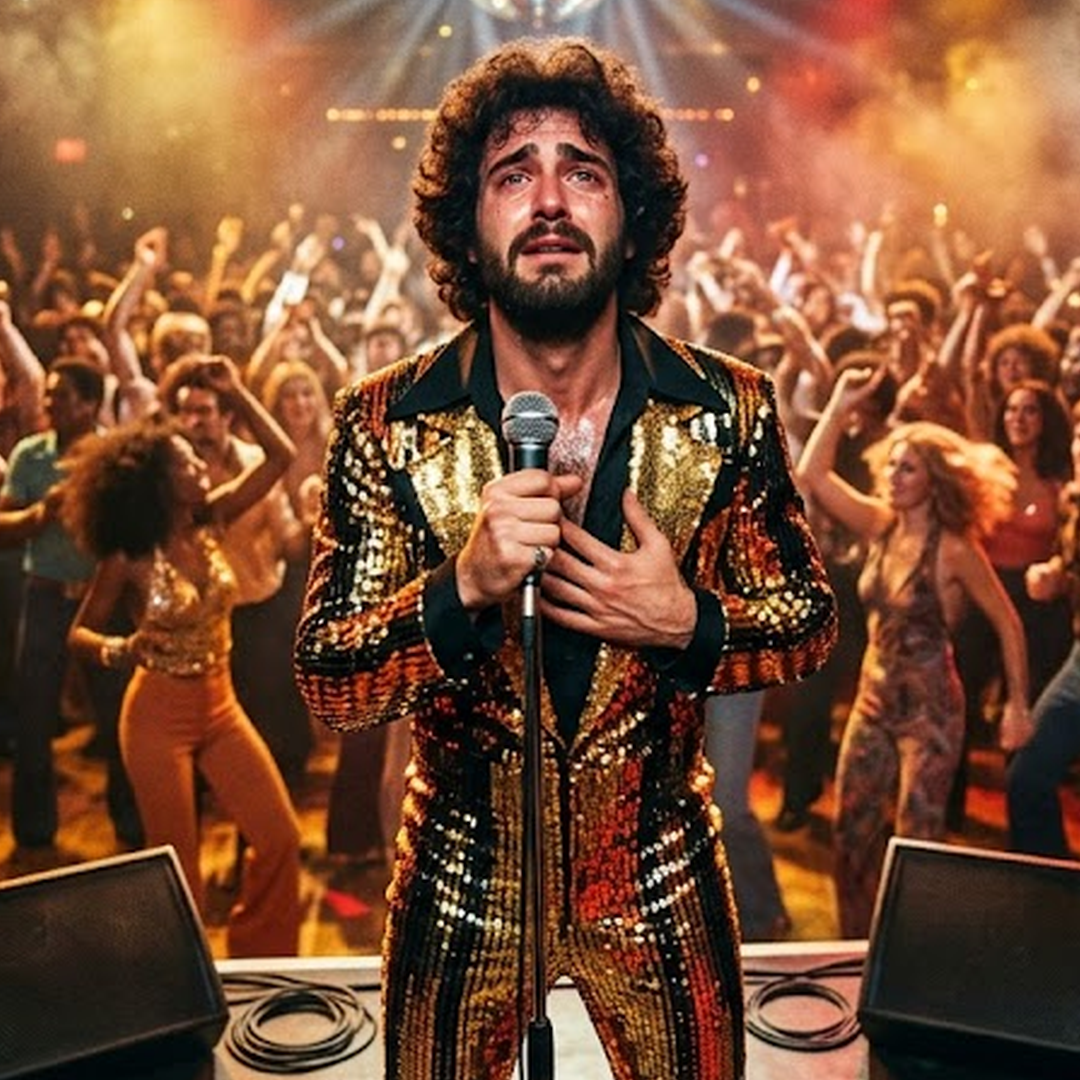
Patrick Hernandez released “Born To Be Alive” in 1979, and the world never truly let the song go.
When the first sounds of the track reached listeners, nobody could have known that it would become one of the most recognizable disco songs ever created. It was a time when dance music was everywhere, when clubs were filled with flashing lights and crowded dance floors, and when a song with the right energy could travel from one city to another almost instantly.
But behind the success was a story of persistence, timing, and a performer who had spent years waiting for the opportunity that would change everything.
Before millions of people knew his name, Patrick Hernandez was simply a musician searching for his breakthrough. Like many artists, he experienced uncertainty and disappointment while trying to find his place. Success did not arrive immediately. It came after years of effort, preparation, and the hope that one song could finally open the door.
That door opened with “Born To Be Alive.”
The track had something instantly recognizable. The beat was powerful, the melody was easy to remember, and the energy matched the excitement of the disco movement that was sweeping across the world. It was not a song that asked listeners to sit quietly and analyze every note. It was a song that invited people to move.
The appeal was immediate.
People walking into clubs heard it and reacted. Radio stations added it to their rotations. Listeners who had never heard Patrick Hernandez before suddenly wanted to know who was behind the voice. A song that began as a recording quickly became an international experience.
The success was extraordinary.
“Born To Be Alive” reached audiences far beyond its original surroundings. It became a major hit in multiple countries and turned Patrick Hernandez into a recognizable figure during one of music’s most colorful eras. The song’s popularity was not limited to one audience or one language. Its rhythm communicated something universal.
That was one of the reasons it lasted.
Many songs become successful because they capture a specific trend. They represent a certain year, a certain fashion, or a certain moment. But some songs become something else. They become connected to feelings people want to experience again.
“Born To Be Alive” became connected to celebration.
For many listeners, hearing the song meant remembering a party, a special night, a dance floor, or a moment when life felt exciting and full of possibility. The song became attached to personal memories, which helped it survive long after the original disco era began to fade.
But worldwide fame brought its own challenges.
When an artist becomes known for one enormous hit, that success can become both a gift and a burden. Audiences often expect the same magic again. The song becomes larger than the person who created it. Every performance, every interview, and every appearance becomes connected to that one unforgettable moment.
Patrick Hernandez experienced that unique reality. A single recording had changed his career and created a legacy that would follow him for decades.
The world saw the success from the outside: the popularity, the attention, and the excitement surrounding the song. But for the artist at the center of it, there was also the strange feeling of watching one creation become a global symbol.
The music industry changed dramatically after the late 1970s. Disco, once considered unstoppable, eventually faced criticism and declined in popularity. Many songs from that era disappeared from public attention. Artists who had dominated the charts were sometimes forgotten as new sounds replaced old ones.
But “Born To Be Alive” refused to disappear.
The song continued appearing in unexpected places. New generations discovered it without necessarily knowing its original story. Younger listeners connected with the same energy that had captured audiences decades earlier. The track found new life because its appeal was never only about disco.
It was about emotion.
The message behind the song carried a feeling of confidence and celebration. It represented the desire to enjoy life, to embrace the moment, and to feel alive. Those ideas did not become outdated when musical styles changed.
That is why the song continued to return.
A person hearing it today may not have lived through 1979. They may not remember the original disco era. They may not know the story of how quickly Patrick Hernandez became famous. But the reaction can still be the same: a smile, a movement, a memory being created in real time.
That is a rare achievement in music.
Thousands of songs become popular every year. Some dominate charts for a short period and then disappear. Others become deeply connected to culture and remain recognizable long after their release. “Born To Be Alive” belongs to that second group.
The song’s journey also shows how unpredictable success can be. There was no guarantee that it would become a worldwide phenomenon. No artist can know with certainty which song will connect with millions of people. Sometimes the right combination of talent, timing, and emotion creates something that cannot be planned.
For Patrick Hernandez, that combination created a moment that lasted much longer than anyone expected.
The world first discovered “Born To Be Alive” as a disco anthem. Over time, it became something more: a reminder of celebration, movement, and the power of a song to connect strangers across generations.
Decades after its release, the familiar rhythm still brings people together. It continues to appear at celebrations, performances, and moments when people want to feel the excitement of music without needing an explanation.
The song’s greatest achievement may not be the charts it climbed or the records it sold. It may be the fact that people still react to it the same way they did when they first heard it.
They hear the opening.
They recognize the feeling.
And for a few minutes, the world feels like a dance floor again.
The legacy of “Born To Be Alive” raises an interesting question: was the song remembered because it captured the disco era perfectly, or did it help define what that era would mean forever? Perhaps the answer is both. A song created in one specific moment became a timeless celebration, proving that some music does not simply belong to history — it becomes part of people’s lives.
After all these years, Patrick Hernandez’s greatest hit remains a reminder that a single song can travel farther than anyone expects. It can cross countries, generations, and changing musical landscapes. It can become a shared memory for people who were not even alive when it was first released.
And that may be the most surprising part of the story: a song born in 1979 is still making people feel alive today.