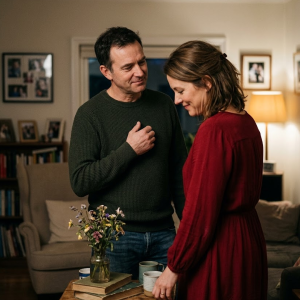
Elena had spent two years making herself invisible.
That was part of the job, even if nobody said it out loud. A cleaning woman on the executive floor was expected to move quietly, leave no trace, and know how to pass through glass offices and polished hallways like a shadow. Elena had become so good at it that most people barely looked at her anymore. Shoes clicked past her. Meetings ended around her. Expensive perfumes and rushed conversations drifted through the air as if she were a piece of furniture.
But she saw everything.
She saw who barked at assistants and who said thank you. She saw who rolled their eyes when junior staff spoke and who listened even when they were busy. She saw exhaustion, arrogance, affairs, panic, and ambition dressed up in designer suits.
And she saw Alejandro.
Alejandro Ruiz, the company’s director general, was the kind of man people noticed before he even entered a room. He was tall, immaculately put together, and carried that dangerous kind of calm that made everyone straighten instinctively. Employees feared disappointing him. Investors respected him. Rivals watched him. He belonged to a world of penthouses, private drivers, and boardroom decisions that changed other people’s lives with a signature.
Elena belonged to none of it.
She lived in a small apartment with a leaking kitchen window and counted every dollar carefully. She worked extra shifts when she could. She sent money to help her younger brother Mateo when he fell behind. She bought discount groceries and stitched the hem of her own uniforms when they tore.
She also made the mistake of falling in love with a man she had no business loving.
At first, she thought it was harmless. A private ache. Something she could manage.
Alejandro had always been polite to her. Not warm exactly, but never dismissive. In an office full of people who barely made eye contact with the cleaning staff, he noticed things. Once he thanked her for staying late after someone spilled coffee across the conference room carpet. Another time he picked up a box of files she dropped and told her not to apologize for existing in a hallway that other people also used.
To someone else, those moments would have meant nothing.
To Elena, who had become used to being overlooked, they meant too much.
She hated that about herself. She knew better. Every day she promised herself she would stop reading kindness as possibility. But the human heart had a cruel way of feeding on crumbs when it was hungry enough.
By the time she realized how deeply she had fallen for him, it was already too late.
The confession happened on a Thursday evening under a sky already bruised with rain.
The office was nearly empty. Most of the staff had gone home, and the executive floor felt larger than usual, all muted lighting and distant echoes. Elena was inside Alejandro’s office doing her usual routine—dusting the shelves, wiping the desk, making sure the glass was spotless. Alejandro sat behind his desk, jacket off, sleeves rolled, reviewing documents with a tension in his face she had never seen so clearly before.
He looked exhausted.
Human.
That single impression shattered the last of her restraint.
She had imagined a hundred times how this could go. In every version, she felt embarrassed. In most of them, she cried later. But at least in her fantasies, the truth would free her from carrying it.
So she stepped closer, clutching the cleaning cloth in both hands to stop them from shaking.
“Boss,” she said softly, “there’s something I’ve been wanting to tell you for a long time. For a long time, I’ve been in love with you.”
The silence afterward was instant and terrible.
Alejandro looked up.
His expression changed so fast it made her stomach drop. The softness she thought she saw was gone. In its place came something sharp and cold and devastatingly cruel.
He rose from his chair so abruptly it rolled backward. Before she could react, he crossed the space between them, yanked the cloth from her hands, and wiped it across her tear-wet face with rough, humiliating force.
“Look at yourself,” he said, voice low and cutting. “You’re just an employee. How dare you set your eyes on me?”
Elena felt as if the floor had vanished.
Heat flooded her face. Her chest seized so tightly she could barely breathe. It wasn’t just rejection. It was erasure. He wasn’t merely telling her he didn’t return her feelings. He was telling her she had forgotten her place and deserved to be punished for it.
She fled.
She did not remember the elevator ride. She barely remembered crossing the lobby. She only remembered the storm outside and the way the rain hit her face like slaps as she walked with no direction and no umbrella, trying to outrun the sound of his voice in her head.
You’re just an employee.
How dare you.
By the time a black luxury sedan screeched to a stop in front of her, she was too numb to be startled.
Then the driver’s door opened, and Alejandro came running toward her through the rain.
Everything about him was different now. He was pale, breathing hard, soaked within seconds, his expensive clothes clinging to him as though he had forgotten what kind of man he was supposed to be. There was fear in his face. Real fear.
“Don’t come near me,” Elena said, backing away.
“Listen to me,” he said.
“No.”
“I had to do that.”
She nearly laughed at the absurdity of it, but the sound that left her was broken. “You had to humiliate me?”
He looked over his shoulder first, scanning the street, before turning back to her.
“There were hidden cameras in my office,” he said. “Not security cameras. Cameras I didn’t authorize.”
Her anger faltered, just enough for confusion to cut through it.
He took a breath and spoke quickly, like a man whose time was running out.
“For weeks, maybe months, someone’s been monitoring me. Calls, meetings, visitors, patterns. I found one camera this afternoon, and then I found out why they planted them.” He swallowed. “Someone on the board knows I’ve been collecting evidence. There’s money missing from the company—shell vendors, fake contracts, diverted funds. I’ve been building a case.”
Elena stared at him through the rain.
“I thought they were watching me to protect themselves,” he continued. “Then I saw your file on my desk.”
“What file?”
“Yours. Personal records. Address, contacts, background, family connections. Someone had gone through everything.”
Cold washed through her.
He reached inside his jacket and pulled out a tiny memory card and a plastic sleeve containing a printed document. Even under the streetlight and rain, Elena could see her own name at the top of the page.
Scrawled across it in red ink was a single word: LEVERAGE.
The sight of it hollowed her out.
“They knew I noticed you,” Alejandro said quietly. “They were preparing to use you to get to me.”
She looked up, shaking. “Notice me?”
His face tightened with something painfully sincere. “Elena, I have been trying not to notice you for months. I failed.”
That should have meant something. Under other circumstances, it might have broken her open in an entirely different way.
But the word leverage was still burning in her mind.
Alejandro pressed the memory card into her hand. “I humiliated you because they were watching live. I needed them convinced you meant nothing to me. If they believed I cared, you would have become a target immediately.”
Before she could answer, another car turned the corner and slowed near them.
Alejandro’s face blanched. “That’s them.”
A man stepped out from the passenger side holding an umbrella. Then a woman emerged behind him, elegant despite the rain, her expression composed and faintly amused.
Alejandro stared at her in disbelief.
“Camila?” he said.
Elena looked between them. She recognized the name from whispered office gossip. Camila Serrano was the daughter of a major investor and, according to half the building, the woman Alejandro was expected to marry.
Camila stopped beside the car and smiled as if she had arrived at a private performance she had paid to enjoy.
“You weren’t supposed to leave the office with that, Alejandro,” she said.
The umbrella-holder, a security man Elena had seen in the lobby, took one step forward. Alejandro instantly moved in front of her.
Camila’s gaze shifted to Elena, cool and appraising.
“So this is the problem,” she said.
“I’m not the problem,” Elena said before she could stop herself.
Camila’s smile sharpened. “No. You’re the inconvenience.”
Alejandro’s voice dropped into something deadly calm. “Stay away from her.”
Camila gave a tiny sigh. “You could have made this simple. Sign the merger papers, stop digging through the accounts, marry me, and everyone keeps their life exactly as it is. But no. You had to become moral.”
Elena looked at Alejandro. “Merger?”
He answered without taking his eyes off Camila. “Her father’s investment group is tied to two of the shell companies. My own board chair approved the contracts.”
Camila’s expression did not change. “Your board chair is your uncle, Alejandro. Let’s not pretend family hasn’t always protected family.”
That explained the panic. The people watching him were not outside enemies. They were inside the company. Inside his family.
Camila nodded toward the memory card in Elena’s hand. “Give that to me.”
“No,” Elena said.
The security man took another step. Alejandro moved again, shoulders rigid.
“Get in the car, Elena,” he said quietly.
She stared at him. “What?”
“I said get in the car.”
Camila laughed softly. “That won’t help. We already have copies.”
Alejandro’s head turned sharply. “Copies of what?”
Camila tilted her head. “Enough to destroy you. Enough to destroy her too, if that becomes necessary.”
The threat hung in the wet night like poison.
Elena’s fear finally hardened into anger. “What did you plan to do to me?”
Camila looked almost bored. “Whatever worked. Theft, misconduct, bribery. It’s astonishing how easy it is to ruin an employee no one important would defend.”
Alejandro lunged before Elena even saw him move, grabbing the umbrella shaft and shoving the security man backward. “Run!” he shouted.
Elena ran.
She got into Alejandro’s car from the passenger side while he circled to the driver’s seat. The engine roared, tires spraying water as he pulled away from the curb. In the rearview mirror, the other sedan jerked forward to follow.
Elena clutched the memory card so tightly it dug into her palm.
“Where are we going?” she asked.
“Somewhere they won’t look first.”
“Who can we trust?”
He gave a humorless laugh. “I’m narrowing that list in real time.”
They drove through rain-slick streets, taking turns too quickly, doubling back twice, finally pulling into the underground garage of an older apartment building Elena did not recognize. Alejandro led her upstairs to a modest apartment that clearly did not belong to the man the office knew. There were no designer touches, no artfully staged luxury details. Just practical furniture, a laptop on a small table, and stacks of folders in locked boxes.
“My safe place,” he said. “Off the company’s radar.”
He handed her a towel, then set the memory card into a laptop adapter with careful hands. Elena stood beside him, soaked and shivering, as folders appeared on the screen.
Hidden camera recordings.
Spreadsheets.
Scanned contracts.
Bank transfers.
Messages between Camila’s father, Alejandro’s uncle, and two board members discussing delayed audits, manipulated reporting, and pressure tactics. Then Elena saw her own name.
In one email, a board member wrote: If Ruiz won’t cooperate, use the cleaner. She’s emotionally compromised and financially vulnerable.
Elena went cold.
Another message contained a proposed plan: plant company property in her locker, accuse her of theft, suspend her, then offer Alejandro a private arrangement in exchange for dropping the investigation.
Alejandro closed his eyes briefly, furious. “I was right.”
Elena looked at him. “You knew they’d do this?”
“I suspected they’d use someone. I didn’t know it was already this far.”
She should have been focused only on the danger, but the pain was still fresh and jagged. “You could have warned me.”
He turned to her, rainwater still drying on his hair, guilt written all over his face. “In that office, with live cameras on us, if I had warned you gently or reacted with any softness, they would have moved faster. I made the worst choice available, but it was the only one I had in those seconds.”
“The only one?” she asked, voice unsteady. “Do you know what that did to me?”
“Yes,” he said, and the rawness in his voice surprised her. “And I will regret it for the rest of my life.”
Silence stretched between them.
Then his phone buzzed once with an unknown number. A message appeared on the screen.
COME BACK ALONE. WE CAN STILL CONTAIN THIS.
A second message followed immediately.
OR WE RELEASE THE FOOTAGE OF HER BEGGING IN YOUR OFFICE.
Elena shut her eyes. That single sentence reopened the humiliation like a wound.
Alejandro looked sick. “I’m sorry.”
“Stop apologizing and tell me what we do,” she said.
He looked at her then with something like respect, maybe even relief. “We send everything to someone who can’t be bought.”
By dawn, they had copied the files three times. One set went to an investigative journalist Alejandro had quietly helped once before. Another went to an external forensic auditor. The third was scheduled to auto-send to multiple regulators if Alejandro failed to enter a passcode by noon.
By midmorning, the first article went live.
It hit like an explosion.
The story named shell companies, suspicious transfers, family ties, and internal messages suggesting witness tampering. It did not include Elena’s name, but it did expose the existence of hidden surveillance used against employees.
Regulators arrived at corporate headquarters before lunch.
Camila’s father issued a denial before his legal team advised silence. Alejandro’s uncle attempted to frame the story as a fabricated attack, but the documents were too detailed and too internally consistent. By evening, the board announced emergency suspensions. Security footage was seized. Offices were searched. Laptops were collected.
Camila made one final mistake.
Furious and cornered, she sent Elena a voice message from an unknown number telling her she should have stayed in her place. Elena, on Alejandro’s advice, forwarded it directly to the journalist and the regulators.
The message spread almost as quickly as the financial scandal.
The public did not respond kindly to hearing an executive heiress casually discuss destroying a low-wage employee’s life for leverage.
Within forty-eight hours, Camila’s father resigned from three corporate posts. Alejandro’s uncle stepped down “for health reasons,” a phrase no one believed. The company opened an independent investigation. Criminal inquiries followed.
And Elena?
For several days, she barely slept. The humiliation in the office did not vanish just because there had been a reason. Her body still remembered the shock of that cloth on her face, the cruelty in his voice, the collapse of everything she had imagined.
Alejandro understood that better than she expected.
He did not pressure her. He did not ask for forgiveness right away. He helped arrange legal protection for her, temporary housing, and independent counsel. He made a formal written statement taking responsibility for his actions in the office without exposing her publicly. When regulators requested interviews, he insisted she be treated as a protected witness, not a disposable employee caught in executive fallout.
He also resigned.
That stunned everyone.
He could have fought to stay. Public opinion had begun to swing in his favor once the full scope of the conspiracy emerged. But Alejandro stood in front of the interim board and said that a company capable of using hidden cameras and worker intimidation had rotted beyond a leadership adjustment. He would cooperate with the investigation from outside.
When Elena heard, she did not know what to feel.
Relief, maybe.
Respect, definitely.
Pain, still.
A week later, he asked if he could see her.
They met in a quiet café far from downtown. No black cars. No rain. No towering office windows.
Alejandro arrived without a tie, without the armor of his position, and looked more nervous than she had ever seen him.
He did not sit until she nodded.
“I loved you badly,” he said. “Not badly as in weakly. Badly as in I handled it in the worst possible way when it mattered most.”
Elena looked down at her coffee. “You didn’t just reject me. You made me feel less than human.”
“I know.”
“You protected me by hurting me.”
His face tightened. “Yes.”
She let the silence work on him for a moment. He deserved that. Then she asked the question that had haunted her since the storm.
“When did you start caring?”
He gave a small, sad smile. “The day you were mopping outside the boardroom and everyone walked around you like you were invisible. You were limping, but when someone dropped a folder, you still bent down to help them before helping yourself. I remember thinking that the kindest person on that floor was the one everyone least valued.”
The answer hurt in its own way because it sounded true.
“I wanted distance,” he continued. “I knew my world was ugly. I knew anyone close to me could get burned. I told myself noticing you was selfish.”
“And then I confessed,” she said.
“And then you gave me three seconds to choose between exposing what I felt and making them believe you were safe from me.”
Elena stared out the café window. “I’m still angry.”
“You should be.”
“I’m not sure I can forget it.”
“I’m not asking you to.”
That honesty landed differently than an excuse would have.
Weeks passed. Then months.
The investigation widened. Charges were filed against two executives and a procurement consultant. The company settled with several staff members over unlawful surveillance and coercive practices. Elena was offered compensation and a new position in facilities administration if she wanted it, with training paid for. To everyone’s surprise except her own, she accepted—not because she owed the company anything, but because she was done living like she had to disappear.
She did well.
Very well.
It turned out that someone who saw everything from the edges understood more about how a place functioned than the people running it from the center.
As for Alejandro, he kept his distance until Elena was the one who closed it.
Not all at once. Not dramatically.
A phone call about paperwork. A lunch that turned into two hours of conversation. A walk where neither of them mentioned love until it was impossible not to. He earned his way back inch by inch, not through grand speeches, but through consistency, accountability, and the rare humility of a man who knew exactly how much damage he had done.
The first time Elena touched his hand again, it was her choice.
The first time she kissed him, she pulled away afterward and said, “This doesn’t erase anything.”
He answered, “It shouldn’t.”
That was the moment she understood they might actually survive what happened—not because the pain was gone, but because neither of them was pretending it had never existed.
A year later, on an ordinary evening with no storm and no witnesses, Alejandro reached into his pocket while they stood on Elena’s apartment balcony.
She laughed immediately. “That gesture makes me nervous now.”
He laughed too, then turned serious as he opened his hand.
Inside was not a memory card or a company file or anything stained by fear.
It was a ring.
Simple. Elegant. No spectacle.
“Elena,” he said, voice unsteady in a way that would have shocked anyone who remembered the man from the executive floor, “I once used my hand to hurt you in the name of protecting you. I have spent every day since trying to become someone whose hands are safe for your heart. I will understand if the answer is no. But if there is any future where you can imagine choosing me freely, I want to ask—”
She kissed him before he could finish, crying for an entirely different reason than the one that had driven her into the storm.
When she finally said yes, she did it laughing through tears.
Sometimes people who hear their story ask the simplest question: Was he right to humiliate her if it saved her?
Elena never answers that question quickly.
Because the truth is ugly. He did save her from something worse. He also wounded her in a way that protection should never require. Both things are true at once.
And maybe that is the hardest part of all—not deciding whether Alejandro was a hero or a villain, but admitting that the biggest red flag was never his status, his wealth, or the people around him.
It was how easily a world built on power could turn one woman into leverage and call it strategy, while the only thing that finally broke the whole machine was the moment she stopped being invisible.