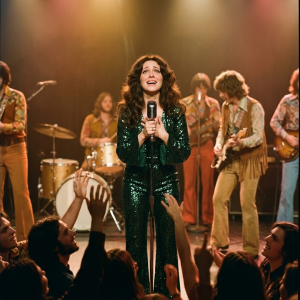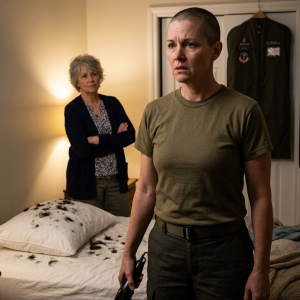
She bought the vineyard where they made her eat with the caterers.
That was the line that spread first, because it sounded too perfect to be true. Too neat. Too poetic. The kind of revenge people invent in hindsight after a bad memory turns into a good story.
But the truth was less polished and far more satisfying, because Patsy Lou Harwick had not stumbled into that ending.
She built it.
Fifteen years earlier, she had driven up to the Caldwell estate on a heavy July afternoon in the Finger Lakes with her shoulders already tense from knowing exactly what kind of welcome she might receive. The vineyard stretched in green lines toward the water, the lake light flashing silver in the distance. The old manor house sat above it all with green shutters and the kind of stone facade that made visitors assume the family inside must know how to hold on to what they had.
Patsy Lou knew better.
Not yet in a business sense. Not in the way she would later learn to read debt in fresh paint or fear in delayed repairs. But she understood something about the Caldwells already. They were the sort of family who could make you feel out of place without ever raising their voices. They preferred exclusion done elegantly.
She had almost told her daughter no.
Her divorce had been final only a few months. She was still raw in the strange, private ways that don’t show on the outside. She had gone back to sleeping on one side of the bed. Back to checking the grocery total before putting anything extra in the cart. Back to using her maiden name in her own head while still hearing people call her by the married one in public. Her daughter, eleven years old and hopeful in the fearless way children can be, had asked her to come to the Caldwell reunion one more time.
“Just one more summer, Mama. For me.”
So Patsy Lou had gone.
The reunion was already underway by the time she arrived. White tablecloths rippled in the warm breeze. Glasses clinked. Someone was laughing near the terrace. Staff moved around carrying trays while cousins and uncles and family friends stood around talking as if the estate itself were proof of some permanent order in the world.
Gerald Caldwell Sr. noticed her the moment she crossed the lawn.
He had a straight-backed way of standing that made every conversation feel like a hearing. Silver hair, steady eyes, sun-browned skin, expensive watch. He was the family patriarch in the way that mattered most to men like him: everyone checked his face before deciding how warm to be.
Patsy Lou barely had time to greet anyone before he stepped toward her, lifted a paper plate from the buffet stack, and handed it to her.
“The family tables are for family,” he said.
No speech. No scene. No raised voices.
Just a sentence delivered with the confidence of a man who had never had to wonder whether he belonged.
A few feet away, someone laughed. Another voice muttered, “Wrong kind of Caldwell.”
Patsy Lou felt it like heat under her skin.
For one awful second she imagined throwing the plate into the grass. Asking Gerald whether his granddaughter counted as family. Asking the assembled crowd why no one was ashamed. But shame was not evenly distributed at places like this. The people causing it rarely carried any.
So she took the plate.
Walked away.
Crossed the lawn and sat in the catering tent on a folding chair beside a teenage server named Marcus, who looked at her with alarm and sympathy. He wordlessly passed her a bottle of water. She thanked him, set the paper plate on her knees, and started eating while the family reunion continued in full sight twenty yards away.
That was where the memory should have stopped. With humiliation. With exclusion. With the ache of trying to keep your face steady while people sort you into your place.
Instead, that was where the future started.
From the catering tent, Patsy Lou had a clear view of the estate. Not the performance of it. The structure.
She noticed the stone retaining wall with a slight outward bow. A stretch of gutter pulling away from the manor’s service wing. Bare vine patches on the western rows. Paint on the shutters beginning to blister at the corners. Too much activity from temporary staff and too little from anyone who looked like they knew how to run the place. Even then, without any training, she sensed that the vineyard was living on reputation.
She watched cousins and in-laws raise glasses under linen and shade and realized something that surprised her.
The Caldwells were not untouchable.
They only looked that way from the family tables.
That night, after her daughter fell asleep in the back seat, Patsy Lou pulled into a gas station outside Watkins Glen. The fluorescent lights were ugly. The coffee sign flickered in the window. She sat there gripping the steering wheel until her breathing slowed.
Then she opened the glove compartment and found an index card.
On it, she wrote one sentence:
One day, I’ll buy the place where you said I wasn’t family.
She folded the card once and slipped it into the left pocket of her jean jacket.
No speech. No witness. No grand vow.
Just a promise made in private, the strongest kind.
The next morning, she still had bills. A daughter. A job that was not enough. A life that did not magically become cinematic because she had been insulted under a vineyard tent. She understood that revenge fantasies did not pay mortgages.
So she did something better.
She went to work.
Patsy Lou got licensed in real estate first because it was practical. She told herself she was trying to build stability. She was. But she was also learning the language of value, leverage, and timing. She learned how people hide desperation in listing language. She learned how banks delay bad news. She learned that the ugliest properties often had the strongest bones and that men with inherited confidence often sold too late because they mistook pride for strategy.
She earned her broker’s license after that.
By then, she had developed an instinct for distressed land. She bought a farmhouse no one wanted because the porch leaned and the septic was failing. She bought an old orchard after two bad seasons scared off better-funded bidders. She bought a tiny roadside hotel with terrible reviews and a better location than anyone noticed. She lost money on one deal, nearly lost sleep on three more, and learned more from the bad closings than the easy ones.
She also learned patience.
That mattered most.
The years moved. Her daughter grew up. Patsy Lou changed from someone people overlooked into someone small-town lenders called back. She built Harwick Land Group under her maiden name. She did not advertise herself as a visionary. She did not posture. She simply became the person who could see what a wounded property might become if managed by someone who respected both numbers and labor.
Meanwhile, the Caldwell estate began to crack in ways only insiders and predators noticed at first.
The vineyard had a few weak growing seasons. Then a management change that solved nothing. Gerald’s sons disagreed about spending but agreed on one thing: none of them liked being told no. They borrowed against future recovery. Deferred maintenance. Assumed the family name would float them through another season, then another. A consultant was hired, ignored, and quietly not renewed. The tasting room underperformed. The event business softened. The books grew uglier.
By 2019, the estate was hemorrhaging money.
By 2021, everyone in the regional property world knew the Caldwells were in trouble, though no one said it plainly in public.
By March of the year the property finally went up for sale, Patsy Lou had already run her own numbers twice.
Thirty-seven acres. Prime lake-adjacent land. Existing brand recognition. Deferred maintenance, yes. Operational incompetence, definitely. But salvageable. More than salvageable. The place had been mismanaged, not ruined.
She made an offer in April.
Cash.
Full asking price.
No contingencies.
The attorney handling the transaction saw Harwick Land Group and treated it as a serious but impersonal buyer. There was no reason for him to connect the paperwork to a woman once handed a paper plate under humiliating summer skies. Patsy Lou did not volunteer the history. She had not waited fifteen years to spoil the scene with advance notice.
The closing was set for a Tuesday morning.
She wore a navy coat, even though the day turned warmer by noon. The left pocket was deep enough for the index card.
In the parking lot outside the law office, she stood for a moment with one hand over that pocket. The card had softened with age. Its corners had bent and gone pale. She had carried it through licensing classes, tense meetings, renovation overruns, one failed negotiation that cost her six figures, and every room where a man assumed she was there to support someone more important.
She went inside.
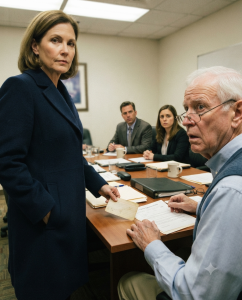
The conference room was bland in the democratic way bad offices are. Old carpet. Burnt coffee. Artificial light that made everyone look slightly tired. An attorney. A paralegal. Two title company representatives.
And Gerald Caldwell Sr.
He was older. Whiter hair. Thinner neck. Still pressed and composed. He was looking down at the documents when she took her seat across from him, not yet aware of what waited on the other side of the table.
For a brief second, Patsy Lou considered whether she wanted him to recognize her early. Whether there was any pleasure in watching the knowledge arrive slowly.
Then the attorney began.
The deal moved page by page, dry and procedural. Parcel descriptions. Conveyance language. Existing easements. Tax acknowledgments. The manor house. The vineyard. The retaining walls. The access road. The lakeside acreage. Patsy Lou initialed where she was told. Gerald signed his sections without lifting his head.
It was almost disappointing in how ordinary the transfer looked. Fifteen years of effort reduced to signatures and staples.
Then the final page was set down.
The attorney nodded to Gerald for one last signature. Gerald reached for the pen, signed, and slid the paper back.
Only then did he look up.
Everything in his face changed.
The color left him so fast it seemed to pull the room colder with it. His mouth parted. His eyes sharpened as if he thought he must be mistaken. But age had not taken his memory.
“Patsy Lou?”
Not Ms. Harwick. Not the buyer’s company name.
Her.
Patsy Lou met his gaze without blinking.
“Yes,” she said.
No one else in the room understood yet, but they felt it. The attorney’s hand paused over the folder. The paralegal stopped typing. The title representatives became very interested in not appearing interested.
Patsy Lou reached into her coat pocket and took out the folded index card.
She placed it on the table and slid it toward Gerald.
“What’s this?” the attorney asked lightly, trying to ease the tension.
“A note,” Patsy Lou said.
Gerald looked at the card as if it might accuse him in a language he already knew. His fingers hesitated before lifting it. The fold was soft with use. He opened it slowly.
As he read, his jaw tightened.
One day, I’ll buy the place where you said I wasn’t family.
Silence held the room.
Not polite silence. Not professional silence.
The kind of silence that appears when a private history walks in and sits down at the head of the table.
Gerald read the sentence again. Patsy Lou could see him trying to decide whether he had truly earned this moment or whether time had somehow been unfair to him. Men like Gerald often preferred to think of cruelty as a misunderstanding once consequences arrived.
“I was angry that day,” he said finally.
Patsy Lou almost smiled.
“No,” she said, quiet and exact. “You were honest.”
The paralegal looked down fast, fighting a reaction.
Gerald folded the card with stiff fingers. Something in his posture changed then. Not humility exactly. More like the exhaustion that follows when pride has nowhere left to stand.
“There’s something about the property,” he said.
The attorney frowned. “Mr. Caldwell, if there’s an undisclosed issue, this is the moment to—”
Gerald held up a hand, still looking at Patsy Lou.
“It’s not structural,” he said. “Not in the way he means.”
Patsy Lou said nothing.
Gerald swallowed. He glanced toward the window, then back at her. “Your ex-husband knew,” he said.
The sentence landed like a dropped glass.
For the first time that morning, Patsy Lou’s pulse shifted.
“Knew what?”
Gerald looked at the card in his hand. “That we were planning to sell pieces off years ago. Before the market turned. Before the debt got this bad.” He took a breath. “He wanted access. Influence. A say in what happened after I was gone. He thought marrying into the family would get him there faster.”
Patsy Lou stared at him, hearing old years rearrange themselves.
Gerald continued, voice lower now, roughened by something that might finally have been shame. “When the marriage failed, he asked me to keep you out of family matters. Said you were emotional. Unpredictable. Said if you felt welcome, you’d keep showing up.”
Patsy Lou’s hand tightened around the edge of the table.
That awful afternoon at the reunion tilted in her memory. The paper plate. The certainty. The calculated coldness of it.
“He told you to humiliate me,” she said.
Gerald shut his eyes for a moment. “He told me distance would be cleaner.”
The attorney exhaled softly, wishing himself elsewhere.
Patsy Lou had spent years thinking Gerald’s insult came from old money arrogance alone. Maybe it had. But there had been another layer under it. Her ex-husband had not merely failed her in private. He had arranged her exclusion in public, then left her to believe it came from people she had married into rather than the man she had once trusted most.
She should have felt shattered.
Instead, what came first was clarity.
Of course.
Of course the man who had treated marriage like leverage would also try to manage the optics of her absence. Of course he would use other people’s contempt if it served him. Of course he believed Patsy Lou would simply absorb the insult and remain small inside it.
Gerald set the card on the table.
“I’m not telling you this to excuse anything,” he said. “I’m telling you because you own the place now, and there’s one more thing you should know. There’s an easement dispute with the lower road, and your ex-husband was one of the people who tried to position himself through it. He won’t have any standing now. But he may come around pretending he does.”
Patsy Lou let the words settle.
The story had not ended with purchase. It had widened.
She gathered the signed documents, the way other people gathered themselves.
“Thank you,” she said.
Gerald looked startled by the courtesy.
It was not forgiveness. They both knew that.
It was finality.
Over the next few months, Patsy Lou did what the Caldwells had failed to do. She hired a vineyard manager with actual field experience. Brought in a financial controller no one could charm. Repaired the western retaining wall before winter. Reworked the event schedule. Scaled back the vanity spending. Invested in drainage, pruning, and labor instead of image. She renamed the tasting program, kept the historical estate name for continuity, and rebuilt trust with the local staff by doing something simple and rare: she listened.
Marcus, the teenage catering server from fifteen years earlier, was found through a mutual contact and invited to manage hospitality after a successful run at a regional hotel group. He laughed when she reminded him of the water bottle in the tent. Then he accepted the job.
On opening weekend under the new ownership, every table on the lawn was first-come, first-served.
No reserved family section.
No invisible hierarchy.
Just long tables under open sky, glasses sweating in the afternoon light, and a kitchen instructed that staff ate before service, not after.
Her ex-husband did show up eventually, though not in the way he had imagined. He came with a polished smile and a story about old connections, expecting private access and perhaps a conversation he could shape. Patsy Lou met him on the terrace in view of paying guests and senior staff.
“I heard there were unresolved issues,” he began.
“There were,” she said.
He smiled, mistaking calm for softness. “I’m glad we can talk like adults.”
Patsy Lou held his gaze. “Adults don’t arrange public humiliation to make separation easier on themselves.”
The smile faltered.
He tried denial first, then reinterpretation, then injury. He called it a misunderstanding. Said Gerald exaggerated. Said he had been protecting everyone during a difficult time. Patsy Lou let him speak until his own words made him look exactly like what he was.
Then she said, “You used people’s prejudice because you thought it would be cheaper than honesty.”
That was the sentence that ended him.
Not legally. Not dramatically.
Socially.
The hospitality director, two event coordinators, and a wine distributor standing near enough to overhear never looked at him the same way again. Reputation in the Finger Lakes did not die in one loud moment. It leaked out through repeated retellings among people who suddenly understood the pattern.
He left before sunset.
Patsy Lou watched him walk to the parking lot without once feeling the urge to call him back.
The vineyard recovered slowly, then unmistakably. The first good season under her leadership did not feel triumphant so much as earned. The wines improved. Weddings returned. The manor house filled on weekends. Guests complimented the atmosphere without understanding that the real renovation had not been cosmetic. It had been moral. The place no longer operated on inherited entitlement. It ran on competence and respect.
Months later, Gerald Caldwell Sr. requested a meeting.
Patsy Lou almost declined. Then she accepted, partly out of curiosity and partly because ownership gives a person the luxury of hearing old men out on their own former property.
They sat on the terrace overlooking the vines. He looked frailer than before, though his voice remained steady.
“I wanted to say I was wrong,” he said.
Patsy Lou let the silence test him.
He continued. “Not just about that day. About what I thought made a family. I believed blood and name gave me the right to decide belonging. I was wrong.”
She studied him for a long moment. The breeze moved the leaves below them. Somewhere near the crush pad, someone laughed.
“You were cruel,” she said.
“Yes.”
“You let another man’s convenience become my humiliation.”
He nodded. “Yes.”
She did not tell him it was all right. It was not. She did not tell him she understood. Understanding had never been the issue.
What she said was, “You can be sorry and still not be owed relief.”
He lowered his eyes. “I know.”
That was as close to justice as some people ever got: not absolution, just accuracy.
When he stood to leave, he paused. “What did you do with the card?”
Patsy Lou touched the pocket of her coat, though the card was no longer there.
“I framed it,” she said.
He looked up in surprise.
“In the office?” he asked.
“No,” she said. “In the staff hall by the kitchen entrance.”
He blinked.
She held his gaze. “I thought that was the right place.”
After he left, Patsy Lou walked down through the rows toward the lower slope where the lake came into view. The sun was dropping gold across the water. Workers were finishing for the day. Someone from the kitchen was carrying food out back to the staff table.
She stopped and looked up at the manor house with its green shutters, the same house she had once studied from a folding chair under a catering tent.
It was hers now, yes.
But ownership was the least interesting part of the story.
What mattered was that she had taken the exact place where someone tried to define her by exclusion and turned it into a place run by different rules. She had not just bought land. She had repossessed the meaning of the day that once humiliated her.
And still, even with all that, the story resisted becoming simple.
Gerald had been cruel. Her ex-husband had been worse. But the deepest wound had come from something many people recognize too late: humiliation is rarely spontaneous. Someone often designs it. Someone benefits from your silence. Someone counts on you doubting what happened long enough for them to move on untouched.
Patsy Lou never gave them that ending.
Sometimes guests asked about the framed index card in the staff hall. They’d stand there reading it, glancing at the old photo beside it of the vineyard before the restoration, then asking what it meant.
Patsy Lou always answered the same way.
“It means people should be careful where they seat you,” she said.
And depending on who was asking, that landed as either a joke, a warning, or the truth.
Maybe it was all three.
The only real question left was the one stories like this always leave behind: who was worse — the man who openly told her she didn’t belong, or the one who made sure someone else delivered the message for him?
Most people had an opinion.
Patsy Lou had a vineyard.