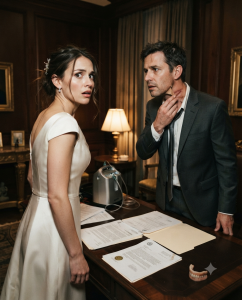
Elena had spent most of her life smiling on command.
By the age of twelve, she knew how to stand slightly to her father’s left so photographers could catch his softer profile. By fifteen, she knew which reporters were friendly, which ones had been paid to be friendly, and which ones were dangerous enough that her father’s staff pretended not to notice them at all. By twenty, she understood that in families like hers, affection was rarely given freely. It was assigned, staged, and deployed.
Her father, Governor Tomás Varela, liked to tell people that Elena was his heart. He said it at charity dinners, campaign launches, memorial services, and televised interviews with the smooth confidence of a man who had practiced sincerity until it became indistinguishable from performance. Audiences loved it. So did donors.
They never saw what happened once the cameras were gone.
At home, Elena was not a daughter so much as a function. She was the educated one. The graceful one. The one who never embarrassed the family. Her mother chose her dresses. Her father approved her public appearances. Her older brother, Martín, treated her like a protected asset that belonged to the family brand as much as any house, foundation, or media outlet.
That was how the Varelas survived: by controlling the image until the image became stronger than the truth.
For years, that had been enough.
Then the contracts surfaced.
At first it was just one article from a smaller publication, the kind her father’s office usually smothered with legal threats and quiet payments. The report alleged that several infrastructure bids had been routed through shell companies linked to donors, then redirected back toward firms with personal ties to the Varela machine. It was ugly, but not yet fatal.
Then a second outlet confirmed parts of it.
Then a former aide gave testimony under sealed review.
Then the opposition began using a word her father hated more than any other: pattern.
The scandal threatened everything. Not just his campaign, but the larger network built around it—consultants, ministries, contracts, foundations, and people who had grown rich by staying loyal. The family entered crisis mode. Calls ran late into the night. Advisers stopped smiling. Her mother began attending private meetings in person, which meant the danger was serious. Martín became crueler, sharper, like stress simply revealed what had always been underneath.
Elena was not invited into those discussions, but she heard enough through open doors and careless rage to understand the shape of the solution before anyone said it out loud.
An alliance.
A marriage.
A rescue wrapped in ceremony.
Senator Esteban Barros had once been nearly as powerful as her father. He came from old political blood, the kind that didn’t need loud speeches because its authority was already woven into institutions. He had vanished from public life years earlier after a sudden decline in health. The official story was cruel but simple: illness had retired him, and his empire had quietly retreated with him.
Yet the Barros name still mattered.
More importantly, it still reassured people with money.
When Elena’s father announced that she was to marry Esteban in a private family union that would be “a celebration of continuity and mutual respect between two longstanding public families,” commentators called it surprising but stabilizing. Investors relaxed. Friendly channels framed it as romantic in a tragic way. The old senator, though frail, would gain comfort and legacy. Elena would become the devoted young wife. Governor Varela would stand at the center of a narrative about loyalty, family, and trust.
Behind closed doors, her father dispensed with the poetry.
“You will do this,” he told her from behind his desk, not raising his voice because he never needed to. “You are not the one being asked to save everyone. You are simply the one best positioned to do it.”
Elena had looked at him for a long moment.
“Save everyone,” she repeated. “From what you did?”
He didn’t flinch.
“From what politics requires.”
Her mother, seated by the window in a cream suit that made her look saintly at a distance, folded one leg over the other and spoke in the calm tone she used when delivering judgments disguised as wisdom.
“You were born into a structure bigger than yourself,” she said. “The sooner you stop confusing discomfort with injustice, the easier your life will be.”
Even then, Elena had not cried. Tears were a language her family treated as weakness unless they could be used on television.
She simply asked, “And if I refuse?”
Martín answered before either parent could.
“You won’t.”
He smiled when he said it.
That smile stayed with her for days.
The wedding was arranged with breathtaking speed. The official line emphasized privacy out of respect for Senator Barros’s condition. Only selected media would attend. Only approved photographs would be released. The residence chosen for the ceremony was elegant and tightly controlled, filled with polished wood, soft gold lighting, and enough security to hide a coup behind silk drapes.
Elena saw Esteban Barros for the first time in person on the day the engagement papers were signed.
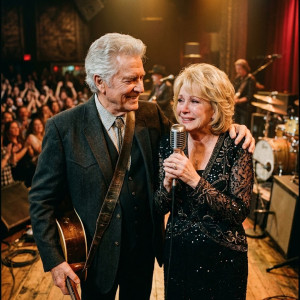
He appeared exactly as promised: pale, weakened, assisted at every step by two close aides and a physician who seemed to hover near his shoulder. A discreet portable oxygen unit moved with him. A patch sat at the base of his throat beneath the collar, part medical support and part visual reminder that this was a man fighting to remain standing. His cheeks were hollow. His speech, when it came, was low and measured, almost thin.
Any sympathetic observer would have pitied him.
Elena did not.
Something was wrong—not with the image, but with the precision of it. The weakness looked curated. Too coherent. Too theatrical in subtle ways that would escape most people. What struck her hardest was his attention. When staff adjusted his chair, his eyes were busy elsewhere. He scanned doorways. Counted bodies. Tracked hands. Measured the room the way men did when they had lived through danger long enough to stop believing in accidents.
Once, during the signing, one of her father’s younger aides stepped forward unexpectedly with an extra folder.
The senator’s fingers twitched toward the inside of his coat before stopping.
Not the reaction of a feeble old man.
The reaction of someone whose body remembered how to reach for a weapon.
Elena noticed. No one else seemed to.
The ceremony itself was a masterpiece of controlled disgust. Her father was reborn in front of the cameras, his warmth restored as though scandal had merely been a misunderstanding. Her mother drifted through conversations praising grace, commitment, divine timing. Martín whispered to Elena during a toast that one day she might even thank them for this.
She nearly smiled at that, though not for the reason he thought.
Because by then she had already made her own decision.
If her family intended to use her body to seal their latest defense, then she would let them. Better to be inside the final room than locked outside it. Better to see who came through the door once the masks dropped.
By midnight, the public celebration had thinned into private ritual. Guests were guided away. Cameras were removed. Staff retreated to the perimeters. Elena was escorted to a private suite prepared for the symbolic first night. It was absurdly luxurious, every detail curated to suggest tenderness no one expected to exist.
When Esteban entered behind her, he quietly locked the door.
Elena turned.
For a second, neither of them spoke. Then the old man crossed the room with a speed that immediately erased twenty years from his body. He set the oxygen device on the table, reached to his neck, and peeled away the synthetic layer disguised as aged skin. Beneath it, a scar marked the base of his throat. He ripped off the breathing patch. Then, with visible irritation, he removed a dental prosthetic that had altered the shape of his jaw, letting his face settle into its real structure.
The transformation was unnerving not because it was magical, but because it was physical and ugly and real. A body stepped out of another body. Frailty drained away. What remained was younger, stronger, and infinitely more dangerous.
“Who are you?” Elena asked.
He looked at her directly. “Julián Barros.”
He let the name sit.
Then he added, “Esteban was my father.”
He explained without theatrics. That somehow made it worse.
His father had not retired due to illness. He had been neutralized. First politically, then medically, then publicly. Diagnosis reports were manipulated. Friendly specialists were bought. Stories were leaked about cognitive decline and private instability. Journalists were paid to repeat them until reputation hardened into fact. Witnesses were coached. Opponents were pressured. Men who had once owed Esteban their careers vanished when the wind changed.
At the center of it, Julián said, was Governor Varela.
Elena’s father.
“He couldn’t beat him cleanly,” Julián said. “So he made sure the country believed my father was already disappearing.”
He produced evidence as he spoke. Not accusations. Not vague suspicions. Documents. Transfer records. Internal messages. Edited medical files. Payment trails to media consultants. Contract redirections. And finally, the marriage agreement itself, with a legal structure so aggressive Elena felt sick reading it.
If the marriage stood, certain financial and institutional protections would become difficult to unwind. If conflict emerged, exposure would spread mutually. Her father had believed he was purchasing shelter.
Instead, he had signed himself into reach.
“With this,” Julián said, touching the final page, “he gave me access he never would have allowed any other enemy.”
Elena listened in silence.
He seemed almost unsettled by her calm. Perhaps he expected hysteria, or loyalty, or the kind of denial sheltered daughters performed when forced to confront family rot. Instead, she felt something colder settle over her.
Validation.
Not because she had known the details, but because she had always known the shape of the truth. Her father did not simply win. He erased. Her mother did not merely defend. She engineered. Martín did not merely obey. He enjoyed.
There were years of things Elena had never been able to prove but had never been able to forget either: a journalist who publicly hinted at procurement fraud, then left the country within weeks; a judge her mother described as “emotionally unstable” two days before he resigned; an aide who begged Elena during a gala to tell her father she had remained loyal, then died in a car crash before the week ended. The official story on each incident had always been tidy.
Too tidy.
Julián waited for her to reject him.
Instead, Elena crossed to the dresser, opened her evening bag, and removed a parliamentary access credential.
“I believe you,” she said.
That got his attention more than any outrage could have.
Then she told him what he didn’t know.
The hard drive that investigators, reporters, and rivals had all been hunting had not truly disappeared. It had been rerouted. Hidden where no one would think to search aggressively enough: inside the private archival systems of her mother’s charitable foundation. The foundation was the family’s halo—hospitals, scholarships, emergency funds, televised generosity. It was also, Elena said, where embarrassing things went to become untouchable.
Julián looked at her with renewed suspicion.
“Why are you telling me this?”
She laughed, a short brittle sound.
“Because I didn’t marry you to save them,” she said. “I married you because I wanted to meet the first person who might destroy them better than I can.”
For the first time that night, he believed her.
Then he reached into his jacket and produced one final item: a photograph.
Elena took it and felt the air leave her lungs.
The image had been taken years earlier in a government corridor. Her father stood outside a medical review office beside a woman in a pale suit, calm and elegant, one hand resting on a folder bearing an official seal. Her mother.
Not cleaning up after the conspiracy.
Present at its beginning.
Julián confirmed it. Her mother had selected intermediaries. Managed the foundation channels. Moved money through philanthropic accounts before public questions were even raised. She had not merely protected the machine after her husband acted.
She had designed the mechanism.
Elena stared at the photograph, and pieces of her childhood rearranged themselves with brutal clarity. Her mother’s serenity. Her obsession with controlled compassion. Her insistence on appearing above politics while quietly managing every sensitive problem. All those years Elena had mistaken her for the quieter evil.
No. She was simply the more elegant one.
“So my father took power,” Elena said slowly, “and my mother built the path to it.”
Julián said nothing. He didn’t need to.
The house below them still murmured with the fading sounds of celebration. Music. Glass. Laughter. Public life pretending to be alive.
Elena put the photograph down and started thinking not like a daughter, but like a survivor.
“If she built it,” she said, “then she hid a failsafe.”
Julián watched her.
“She never trusts anyone completely. Not my father. Not Martín. Not donors. Not allies.” Elena’s voice sharpened with certainty. “There will be a duplicate archive. Not just enough to pressure them. Enough to own them.”
They moved fast.
Elena knew the private structure of the residence and the habits of its security staff. Newly married, publicly exhausted, and considered politically harmless, she was perhaps the last person anyone expected to become a threat that night. Julián changed back only partially—keeping a coat and lowered posture to preserve distance in dim corridors—but the performance no longer needed cameras, only timing.
They waited until the last cluster of guests drew staff attention toward the lower salon. Then Elena led him through a side passage connecting the residential wing to the administrative offices used for foundation work during major events.
The foundation archive room was not labeled openly. It hid behind a donor records office with decorative shelving and carefully staged innocence. Elena bypassed the first lock with a code she had watched her mother use three years earlier. The second required a key card. Her parliamentary credential did not grant full access, but it triggered a restricted prompt. She smiled grimly.
“My mother hates carrying the same card twice,” she whispered. “She usually keeps the override in the desk nearby.”
Two minutes later, she found it taped beneath a drawer compartment, exactly where a woman who trusted no one and loved control might hide something she still wanted within reach.
Inside the archive room, the air was colder.
Rows of sealed boxes lined the walls. Digital terminals slept behind dark screens. Everything was arranged with the pious order of a place designed to seem too boring to matter.
Julián began scanning drives and folders while Elena moved instinctively toward the cabinets marked with innocuous foundation project names. She ignored the obvious ones. Her mother never protected secrets with names that sounded important. She buried them in files that suggested repetition and fatigue.
She found the first clue in a folder labeled Rural Nutrition Outreach, Quarter IV. Inside were donor summaries, then beneath them a paper ledger of transfer references that did not belong there. Account numbers. Date clusters. Cross-references matching initials Elena recognized from judges, consultants, and media intermediaries.
“Here,” she said.
Julián joined her, and together they traced the ledger to an encrypted terminal partition. He worked with controlled urgency, entering codes taken from materials he had already gathered. Twice the system denied him. The third time it opened.
What appeared on the screen was worse than either of them expected.
There were the contract diversions, yes. The false medical chain against Esteban Barros, yes. Payment routes to reporters, prosecutors, and private fixers, yes. But there was more: a strategic archive of compromises maintained by Elena’s mother like insurance against every major ally around her. Recorded calls. Draft threats never sent. Signed acknowledgments. Personal secrets cataloged beside political leverage. It was not just corruption.
It was architecture.
Her mother had not simply helped her father seize power. She had built a control system around everyone who might one day threaten him—or her.
Julián copied everything to an encrypted drive he had brought concealed inside the shell of the oxygen unit. Elena watched folder after folder transfer while nausea battled with vindication in her chest.
Then footsteps sounded outside.
Not random footsteps. Deliberate. Approaching.
Elena killed the terminal light. Julián moved to the side of the door. The handle turned once, then stopped. A soft knock followed.
Her mother’s voice came through the wood.
“Elena?”
Every muscle in Elena’s body locked.
Another gentle knock. “Open the door.”
Julián looked at her, waiting.
In that second Elena understood two things at once. First: her mother already knew. Not everything, perhaps, but enough. Second: if they were caught now, the evidence might vanish before dawn and both of them with it.
Her mother spoke again, still calm.
“I know you’re in there.”
Elena stepped toward the door before fear could stop her. Julián caught her wrist once, briefly, then released it.
She opened the door halfway.
Her mother stood alone in the corridor, immaculate despite the late hour, her face composed into maternal concern. But her eyes were alive with calculation.
“You left your own wedding,” she said softly. “People are noticing.”
Elena leaned against the frame as if tired. “I needed air.”
Her mother’s gaze moved past her shoulder, assessing shadows, space, detail. “With your husband?”
Elena held her stare. “Is that what he is?”
For the first time, a crack appeared. Tiny. Real.
Her mother did not deny knowing.
Instead, she smiled the way surgeons might smile before making an incision. “You always were brighter than your father believed.”
That sentence chilled Elena more than a threat would have.
Behind the half-open door, the last files finished copying.
Her mother lowered her voice. “Whatever you think you found, be careful. Men like your father destroy out of appetite. Men like Barros destroy out of grief. Neither type leaves room for survivors.”
Elena felt something harden.
“And what do women like you do?”
Her mother’s expression became almost sad. “We decide which ruins are worth living in.”
Then she glanced once toward the dark room and said, “Tell Julián that if he releases only what hurts your father, he might live long enough to regret mercy. If he releases everything, this country burns with us.”
There it was. Not confession. Not apology. Just scale.
Elena understood then that her mother was not there to stop them. She was there to negotiate with the apocalypse.
From inside the room came the nearly silent click of the encrypted drive finishing.
Elena opened the door wider on purpose, enough for her mother to see Julián standing in the shadows.
“No,” Elena said, her voice steady now. “You don’t get to choose the ruins anymore.”
For the first time in Elena’s life, her mother looked at her not as a daughter, not as a symbol, not as an extension of the family machine.
But as an adversary.
Her face emptied of warmth.
“Then do it properly,” she said.
She turned and walked away without another word.
Julián stepped forward, the drive hidden in his palm. “She’ll warn them.”
“She already has,” Elena said.
They left through separate corridors, reunited in the underground garage, and drove out in a vehicle assigned to the foundation logistics team—anonymous enough to avoid immediate attention. By dawn, copies of the archive were in the hands of three journalists, one opposition prosecutor, two foreign watchdog organizations, and a judge her mother had once tried to sideline but never fully controlled.
The story exploded before noon.
Not as one scandal, but as a system. Medical fraud. Contract theft. Media manipulation. Judicial coercion. Philanthropic laundering. Blackmail architecture. The Varela machine did not crack; it ruptured.
Her father appeared on television first, furious and incoherent, blaming fabrication, betrayal, international interference. Martín vanished for forty-eight hours before trying to negotiate his way into immunity. Her mother said nothing publicly for nearly a day, which frightened commentators more than if she had screamed.
When she did speak, it was in a single statement through counsel: “No structure built on fear believes itself corrupt while it is winning.”
It was the closest thing to remorse anyone ever got from her.
Arrests began within the week. Investigations multiplied. Allies turned on each other with astonishing speed. Men who had swaggered through twenty years of backroom certainty suddenly rediscovered conscience under oath. The charity foundation froze operations pending review. Parliamentary hearings reopened dormant files. Esteban Barros’s name was formally cleared of the illness narrative that had ended his public life.
As for Julián, he did not step into the light as a hero. He gave testimony, surrendered evidence, and refused every attempt to turn him into a televised avenger. “This was never revenge alone,” he said once, in a rare statement. “It was correction.”
Elena, meanwhile, became something the public had not expected: not a grieving daughter, not a loyal defender, and not a saint. She testified. She admitted what she knew, what she suspected, and what she had chosen not to ask sooner. Some called her brave. Some called her complicit. Both had some truth in them.
The marriage was annulled, but the bond forged that night did not vanish so cleanly. She and Julián remained linked by the strange intimacy of people who met at the exact moment their inherited lies collapsed. They were not lovers in the sentimental way headlines wanted them to be. They were witnesses to each other’s damage. Sometimes that is deeper and less survivable.
Months later, after the hearings and the raids and the endless televised collapse of everything she had been born into, Elena stood outside the now-shuttered foundation building and looked up at the windows where her mother had hidden the archive that could destroy them all.
People still asked her the same question in different forms.
Did she regret it?
Regret exposing them. Regret waiting so long. Regret helping a man infiltrate her own family. Regret becoming the blade that finally cut through the dynasty that raised her.
She never answered the same way twice.
Because the truth was ugly.
She regretted that none of it had shocked her enough.
She regretted how easily power had trained everyone around her to call cruelty necessary.
She regretted that when the end finally came, it felt less like tragedy than recognition.
But if there was one thing she never regretted, it was the moment in that locked room when a dying old man peeled off his disguise and told her he had come to open the scandal rather than bury it. Because for the first time in her life, someone had entered her family’s world not asking what it would take to protect it, but what it would take to end it.
And once that question was asked honestly, there was never going to be a wedding night, or a foundation, or a speech polished enough to close it again.
Even now, people argued over who the real monster had been. The father who grabbed power. The mother who engineered survival. The brother who learned to enjoy the machinery. The daughter who stayed quiet until the right enemy appeared. The son who wore his dead father’s name like a weapon.
Maybe the ugliest answer was that corruption like theirs never belonged to one person. It became a family language, passed down until someone finally decided to speak against it.
Elena just happened to be the one who did.