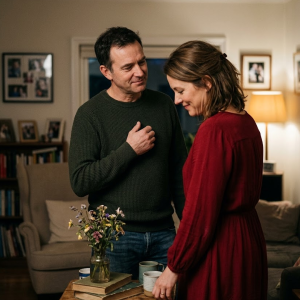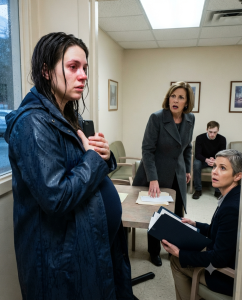
“My husband died while I was pregnant, and my mother-in-law offered me €5,000 to get rid of the baby.”
Valeria would remember that sentence for the rest of her life—not because she planned to repeat it, but because it marked the exact moment she stopped being afraid of Carmen Mendoza.
Until then, fear had shaped almost every part of her marriage.
Not fear of Mateo. Never Mateo.
Mateo was the only reason she had survived the Mendozas as long as she did.
The fear came from his family’s world: the old money manners, the smooth lies, the polished cruelty disguised as elegance, the rules nobody said out loud but everyone enforced. Carmen Mendoza ruled that world like a queen who had mistaken power for love. Her opinions were law. Her silence was punishment. Her approval was rationed like gold.
And from the very beginning, she had made one thing clear: Valeria did not belong.
Valeria had not grown up in Salamanca or La Moraleja. She had not inherited property, or a surname that opened doors, or the kind of accent that made waiters straighten their backs. She had built everything she had with work. She was an interior designer with good instincts, sharp taste, and the kind of discipline that came from never having a safety net. Mateo had loved that about her. Carmen had despised it.
“She’s ambitious,” Carmen would say in front of people, smiling as if it were praise.
What she meant was: she came from less, and I will never let her forget it.
Still, Mateo chose Valeria. Married her. Moved her into the Salamanca apartment. Defended her when he could, soothed her when he couldn’t, and kept promising that one day they would step outside his mother’s shadow for good.
Then Valeria got pregnant.
Mateo cried when she told him. Real tears. The kind that start with laughter and end with somebody holding your face like they can’t believe life gave them something this beautiful.
Carmen’s reaction was much colder.
“Well,” she said over lunch, setting down her wineglass with practiced grace, “let’s hope it’s a boy. The Mendoza name should continue properly.”
Valeria had smiled tightly and looked away. Mateo had changed the subject. That was how things worked in that family. Damage was rarely confronted in real time. It was absorbed, stored, and paid for later.
But even before the accident, cracks had started widening.
Valeria had spent nearly a year designing and managing renovations on two of Carmen’s villas in La Moraleja. It was not a favor. It was real work: contractors, deadlines, overruns, imported stone, custom carpentry, endless revisions. Carmen had demanded perfection and expected gratitude. When the work was done, the amount unpaid stood at €45,000.
When Valeria finally asked for payment, Carmen had smiled and said, “We don’t bill family. Think of it as your contribution.”
Mateo had been furious in private. In public, he was trapped. Carmen controlled too much of the family business, too many accounts, too many loyalties. Every attempt to challenge her turned into a war.
Then there was Fernando.
Younger, charming, weak. The kind of man people kept rescuing because he knew how to look ashamed at the right moment. He had quietly racked up gambling debts and buried bad decisions inside the family’s logistics company until payroll was at risk. Mateo had discovered it late and panicked. If Carmen found out, she would protect Fernando publicly and blame Mateo privately. She always did.
Valeria had stepped in without hesitation. She used €22,500 from her own savings to stabilize things long enough for Mateo to clean up the mess. Mateo, humiliated and grateful, signed a private loan agreement before a notary. He promised he would repay her and make everything right once he had more control.
He never got the chance.
The accident happened on a wet evening on the M-40. A chain collision. Twisted metal. A call from an unknown number. A rush to the hospital that felt unreal from the first second. Valeria remembered the smell of rain on the taxi seat, the cold in her fingers, the way every traffic light felt like an insult.
At the ICU, the doctor had spoken carefully, and that carefulness had scared her more than panic would have.
“Severe trauma. Internal injuries. We are doing everything we can.”
Then Carmen arrived.
Perfect coat. Perfect hair. No visible grief.
She didn’t ask to hold Valeria’s hand. She didn’t cry against the wall. She didn’t ask, “How bad is it?”
She said, “Come with me.”
Valeria, half numb, followed her back to the Salamanca apartment because Carmen said they needed paperwork, insurance details, signatures. Valeria was too overwhelmed to resist. She still thought they were on the same side because Mateo was still alive.
That illusion died in the living room.
Carmen took out a white envelope and held it toward her.
“Take this €5,000, get an abortion tomorrow morning, and disappear from this neighborhood.”
Valeria stared at her. At first she truly thought she had misheard.
But Carmen went on, precise and calm.
“No child of yours will enter this family line. Mateo made enough mistakes. I will not let one more become permanent.”
Valeria’s body went cold.
“Mateo wanted this baby.”
“Mateo wanted many foolish things.”
Valeria said it was her home. Carmen laughed. Said the apartment belonged to Mateo, which now meant it would be handled properly. Told her to hand over the keys. Told her to pack her “cheap little things.” Said the child would inherit nothing.
And then, while her son fought for his life, she checked the time and complained about the price of funeral wreaths.
That was the moment the phone rang.
Doctor Espinoza’s voice changed everything.
Mateo was awake. He wanted to see her. Carmen had ordered staff not to let her in.
Valeria took one look at herself in the bathroom mirror and understood something with shocking clarity: no matter how much she had endured, no matter how much money she had put into their family, no matter how loyally she had kept silent, Carmen would never stop until Valeria and her child were erased.
So Valeria left.
Rain lashed the city as she drove back. Doctor Espinoza was waiting at the rear entrance with a gown and urgency in his eyes. He brought her through service corridors and stopped outside ICU box four.
“Record everything,” he said. “What your mother-in-law is doing may be criminal.”
When Valeria entered, Mateo looked broken almost beyond recognition. Bruised. Intubated. Fading.
But lucid.
His eyes found hers, and for a second everything in the room narrowed to that one unbearable thread between them.
Doctor Espinoza summoned two nurses as witnesses and announced an emergency testament due to imminent death.
Valeria started recording.
Mateo forced the words out.
He revoked any prior powers of attorney. Said his mother had made him sign documents while sedated. Called it fraud. Then he named Valeria sole universal heir to all his assets and shares. He told her to protect the baby. Told her he loved her. Told her not to let Carmen win.
Then his heart stopped.
The sound of the flatline lived in Valeria’s bones long after that night.
She was pushed into the hallway as the medical team rushed in, but she already knew. Mateo was gone.
There are moments in life when grief is too large to feel immediately. It becomes a pressure in the body, a suspended collapse. Valeria stood there clutching her phone, not crying, not speaking, because something more urgent than tears had entered the room with death.
Proof.
Mateo had left her proof.
And Carmen didn’t know it yet.
Doctor Espinoza walked her to the family waiting room. Through the half-open door she saw Carmen sitting with a lawyer, composed as ever. Fernando sat in the corner, pale and silent.
Valeria stepped in.
Carmen rose. “Who let you in?”
Valeria looked straight at the folder in the lawyer’s hands. Mateo’s navy document file.
The lawyer, a middle-aged man with tired eyes and careful manners, said Carmen had informed him her son intended to transfer temporary control of his shares before the accident.
“While sedated?” Valeria asked.
The room froze.
Carmen’s expression hardened instantly. “You are emotional. This is not the time.”
Valeria ignored her and looked at the lawyer. “That file contains a loan agreement too. Signed before a notary. My money covered your client’s other son’s mistakes.”
Fernando shifted in his chair.
The lawyer opened the file and began reading. His face changed almost immediately.
Carmen noticed. “What is it?”
He did not answer right away. “Mrs. Valeria, do you have evidence of your husband’s statements tonight?”
“Yes.”
“May I see it?”
Valeria handed him the phone.
He watched the video once. Then again.
By the end, his posture had changed. He was no longer sitting beside Carmen. He was sitting across from her.
“This meeting is over,” he said quietly.
Carmen stared at him. “Excuse me?”
“I will not participate in the execution of documents that may have been obtained fraudulently from a sedated patient. And if this recording is authenticated, your son’s declaration changes everything.”
For the first time that night, Carmen lost control of her face.
Only for a second. But Valeria saw it.
Panic.
“What nonsense,” Carmen snapped. “He was confused. Drugged.”
Doctor Espinoza, who had followed Valeria to the door, stepped inside. “He was lucid. I can testify to that. Two nurses witnessed the statement.”
That should have been enough to silence anyone.
But Carmen was not anyone.
She turned on Valeria with breathtaking venom. “You planned this. You trapped my son with that pregnancy and now you come scavenging for inheritance before his body is even cold.”
Valeria would later remember the exact instant she stopped shaking.
It was not when Carmen insulted her.
Not when Fernando looked away.
Not even when Mateo died.
It was when Carmen said pregnancy like it was a weapon and inheritance like it was grief.
Valeria took a step forward.
“For years,” she said, “you called me a gold digger while living off my work. You owe me €45,000 for the La Moraleja renovations. Your son owes me €22,500 for the money I used to save your company after Fernando nearly destroyed it. You barred me from my dying husband’s bedside. And tonight you tried to pay me to abort his child while he was still alive. So let me be very clear: I am done protecting this family.”
Fernando stood up too fast, knocking his chair back.
“Mother,” he muttered, voice thin, “stop.”
Carmen turned toward him slowly.
It was a fatal mistake.
The lawyer looked at Fernando. “Is the debt issue true?”
Fernando said nothing.
“Answer me,” the lawyer said.
Fernando’s silence was answer enough.
What happened next unfolded quickly.
The lawyer withdrew from representing Carmen that same night. Doctor Espinoza filed an internal report. Valeria sent copies of the recording to herself, to a trusted friend, and to two separate cloud accounts before sunrise. By morning she had a probate attorney of her own, and unlike Carmen’s circle, this one had no loyalty to family myth.
Over the following weeks, the truth came apart in layers.
The so-called transfer papers Carmen tried to push through had been signed while Mateo was under heavy medication after an earlier procedure, days before the accident. There were timing discrepancies, altered witness logs, and language inconsistent with Mateo’s known instructions. The emergency deathbed declaration, supported by medical witnesses and video evidence, became central.
Then the financial records surfaced.
Valeria had kept everything.
Invoices from the villa renovations.
Emails.
Messages.
Bank transfers.
The notarized loan agreement.
Internal payroll records linked to the bailout she had provided.
Every time Carmen had assumed Valeria would stay quiet, Valeria had archived proof instead.
That changed the entire legal battlefield.
The family’s public image began to crack. Quietly at first. Then less quietly.
Fernando, under pressure, made things worse for his mother by trying to negotiate privately with Valeria. He called her one night sounding wrecked, begging her not to “destroy the family.” When she asked whether Carmen had told him about the €5,000 abortion offer, he went silent for so long she knew he had not heard the whole truth.
“She said you were hysterical,” he murmured.
Valeria almost laughed.
Instead, she sent him the audio she had recorded in the apartment before leaving for the hospital—a detail Carmen had never imagined. In her panic, Valeria had turned on her voice recorder moments after the envelope came out. Carmen’s offer, her threat about inheritance, her order to disappear—it was all there.
Fernando listened.
He never called his mother “misunderstood” again.
Months later, Carmen tried one final move. She challenged the legitimacy of the pregnancy itself, implying that the baby might not be Mateo’s.
It was ugly. Predictable. Desperate.
Valeria did not cry in court. She did not break. She did not plead.
She submitted the paternity results when the time came.
Mateo was the father.
The courtroom fell silent in that particular way it does when someone’s last mask slips off in public.
By then Valeria had already given birth to a daughter.
A girl.
Tiny, fierce, dark-haired like Mateo.
Carmen did not come to the hospital. She did not send flowers. She did not ask for a photograph. She sent, through an intermediary, one cold proposal for a private settlement in exchange for confidentiality.
Valeria rejected it without discussion.
In the end, the court upheld Mateo’s emergency declaration. Valeria was recognized as his legal heir, with her daughter’s rights protected. The fraudulent document attempt collapsed. Her financial claims were separately validated in settlement negotiations once the supporting evidence became impossible to dismiss. Fernando, facing exposure of his own financial misconduct, cooperated more than his mother expected and less than Valeria forgave.
The Salamanca apartment was no longer a weapon Carmen could use against her.
The shares were no longer hers to manipulate.
The child she had wanted erased existed, legally and undeniably, in the Mendoza line.
And perhaps worst of all for Carmen, the story she had spent a lifetime controlling no longer belonged to her.
A year after Mateo’s death, Valeria stood in the nursery of a smaller, warmer home far from Salamanca’s polished cruelty and watched her daughter sleeping. The room was painted in soft earth tones. Handmade curtains filtered the afternoon light. On one shelf sat a framed photo of Mateo laughing at the beach, head tilted back, alive in the way photographs can be cruel enough to preserve.
Valeria still missed him with an ache that language could not fix.
Winning did not bring him back.
Justice did not soften the memory of the flatline.
Exposure did not erase the night he died.
But it did something else.
It ended the lie.
The lie that money could bury truth.
The lie that silence was dignity.
The lie that grief belonged to whoever had the strongest surname.
Sometimes, late at night, when the house was quiet and her daughter finally asleep, Valeria replayed his final words.
Protect our baby.
I love you.
Don’t let her win.
She had done all three.
And yet what haunted her most was not Carmen’s offer, or the forged papers, or even the inheritance fight.
It was how many years she had mistaken endurance for peace.
How many insults she had swallowed because she loved Mateo.
How many red flags had worn the costume of family tradition.
How easily cruelty had been normalized when it arrived dressed in expensive wool and soft voices.
Carmen lost in the end.
But the more unsettling truth was that she had been allowed to rule for so long because everyone around her had adapted to her damage. Mateo had loved Valeria, but even he had underestimated how dangerous delay could be. Fernando had hidden behind weakness for years. Lawyers, assistants, relatives, employees—too many people had chosen comfort over confrontation until death forced honesty into the room.
Valeria looked at her daughter and made herself one promise.
This child would never learn that love required humiliation.
She would never be taught to stay quiet to keep powerful people comfortable.
She would never confuse elegance with goodness.
Because inheritance was never only about money.
Sometimes the real inheritance was a pattern.
A silence.
A permission.
And sometimes the bravest thing a mother could do was make sure that ended with her.