Frank had always believed that some moments in life were too small for anyone else to notice.
A cup of coffee.
A few minutes of silence.
A chair placed beside someone who looked alone.
He never imagined that one small decision on a freezing Tuesday morning would transform a quiet corner of the neighborhood and uncover a connection he had forgotten for decades.
Before retirement, Frank spent most of his life around machines. For forty years, his hands were covered in grease from repairing engines, replacing worn parts, and bringing broken vehicles back to life.
Cars made sense to him.
If something stopped working, there was usually a reason. A damaged part. A loose connection. A neglected problem that had grown too large.
People were different.
People carried invisible damage.
They carried memories, regrets, and losses that no one else could see.
That was why Frank never approached the elderly woman at the bus stop during those first three weeks.
He noticed her every morning, but he convinced himself that someone else would notice too.
Someone younger.
Someone more confident.
Someone who knew what to say.
But every morning, nobody came.
The woman would stand there alone, looking down the road as the minutes passed. She never complained. She never asked for help. She simply waited.
Frank knew that kind of waiting.
He had lived with it for years.
The memory of his mother was something he rarely shared. She had always been the person who showed up for everyone else. She remembered birthdays, made phone calls, checked on neighbors, and somehow always knew when someone needed support.
But when she needed someone, Frank wasn’t there.
He never stopped loving his mother.
He never stopped regretting that day.
So when he saw the elderly woman struggling against the freezing weather, he wasn’t only seeing a stranger at a bus stop.
He was seeing an old wound.
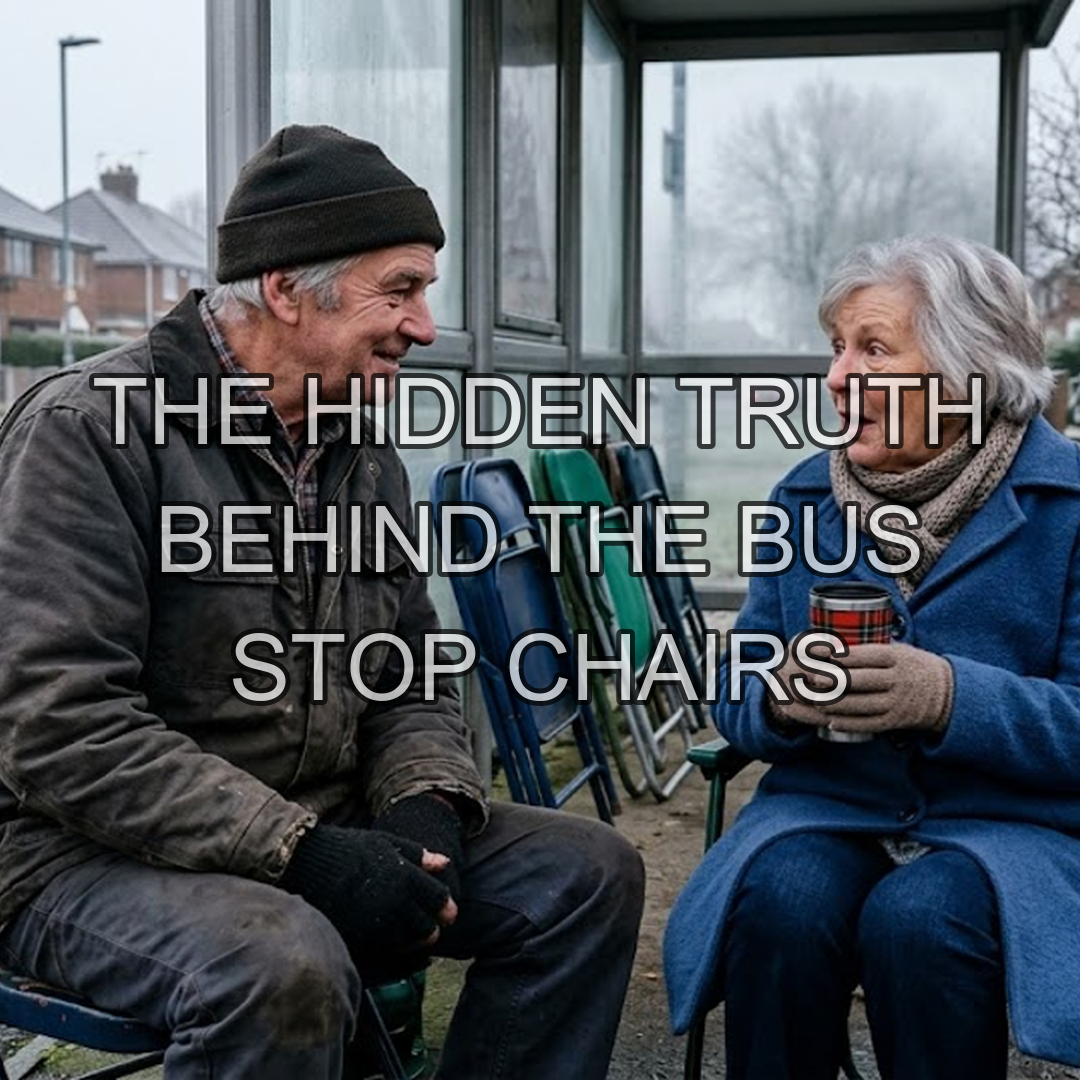
That morning, Frank grabbed a thermos from his kitchen cabinet and a folding chair from his garage.
He didn’t make a plan.
He didn’t prepare a speech.
He simply walked across the street.
The woman looked at him with surprise when he sat beside her.
“Cold morning,” he said.
She gave a small smile.
“Yes, it is.”
Frank handed her the coffee.
“I thought you might want something warm.”
She accepted it carefully.
“Thank you.”
The bus arrived a few minutes later.
Frank watched her board.
And the next morning, he came back.
At first, their conversations were short.
They talked about the weather. The delayed buses. The changing seasons.
But eventually, the woman began sharing small pieces of her life.
Her name was Margaret.
She had lived in the neighborhood for more than thirty years. She had raised a family there. She had watched children grow up and houses change owners.
But after her husband died, her mornings became quiet.
The bus stop had become part of her routine because it gave her somewhere to go.
Somewhere that made the day feel like it had started.
Frank understood.
Sometimes people don’t need someone to solve their problems.
Sometimes they just need someone to sit beside them.
The neighbors began noticing the routine.
They noticed Frank carrying the chair every morning.
They noticed Margaret smiling more.
They noticed that a place once defined by waiting had slowly become a place where people connected.
One afternoon, a neighbor named Daniel asked Frank why he kept doing it.
Frank didn’t expect the question.
He looked at the empty bus stop and thought for a moment.
Then he told the truth.
“My mother died waiting for someone who never showed up.”
The sentence changed the way people saw him.
Until then, they had seen a retired mechanic helping an elderly woman.
Now they understood that Frank wasn’t trying to be impressive.
He was trying to repair something inside himself.
Word spread quietly.
Nobody created a schedule.
Nobody assigned responsibilities.
People simply began showing up.
A woman from two streets away brought another chair.
A man who walked his dog every morning started stopping for coffee.
A teenager waiting for school began saying hello.
The bus stop became a place where strangers became familiar.
Then, six months after Frank first sat down beside Margaret, something unexpected happened.
Margaret arrived carrying an old photograph.
She looked nervous.
Frank noticed immediately.
“Everything okay?” he asked.
She sat down slowly.
“No,” she said. “I think there’s something you need to know.”
She handed him the photograph.
Frank looked down.
For several seconds, he didn’t move.
The picture showed Margaret years earlier with her husband and another man standing beside them.
A man Frank recognized.
His younger brother.
The brother he had lost contact with after a painful family disagreement many years before.
Frank’s hands tightened around the photograph.
“Where did you get this?”
Margaret took a deep breath.
“Your brother was my husband’s closest friend.”
Frank looked at her, stunned.
She explained that years ago, before moving away, Frank’s brother had often talked about him. He had regretted how their relationship ended but never knew how to fix it.
Margaret had known Frank’s name for months.
She had recognized him when he first sat beside her.
But she stayed quiet because she didn’t know if reopening old memories would hurt him.
She only brought the photograph because she believed he deserved to know.
The revelation changed everything.
The bus stop was no longer just where Frank helped a stranger.
It was where old memories returned.
Where forgotten connections resurfaced.
Where two people who thought they were simply passing through each other’s lives discovered they had been connected all along.
Frank never found a way to change what happened with his mother.
That regret would always exist.
But he finally understood something important.
Showing up late was still better than never showing up at all.
And by sitting beside Margaret every morning, he had done more than comfort another person.
He had created a place where nobody had to feel invisible.
The chairs remained at the bus stop.
The coffee continued.
The conversations continued.
Years later, people still talked about the retired mechanic who changed a neighborhood without ever trying to become a hero.
Some people believed Frank had saved Margaret from loneliness.
Others believed Margaret had given Frank a second chance to heal.
Maybe both were true.
Because the biggest lesson from that bus stop wasn’t that one person can change the world.
It was that one person can change one moment.
And sometimes one changed moment is enough to remind everyone nearby that kindness is something people can choose, especially when they decide not to walk past someone who is waiting alone.