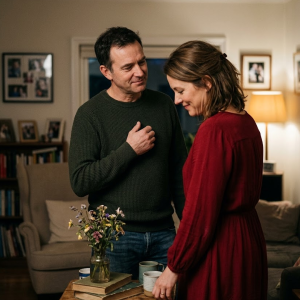
“You’re not the woman I chose.”
Eli Merritt said the words flatly, not cruelly, but with the blunt honesty of a man too tired to decorate facts. The woman standing in front of him did not flinch.
Behind her, the last of the coach dust drifted across the Cedar Fork crossing and disappeared over the dry October grass. In front of him stood a stranger with a battered suitcase, a thin coat, and a folded letter she held like it was the final scrap of certainty left in her possession.
Cora Whitfield looked as though life had already introduced itself without gentleness.
She was not the bride he had sent for. That much was obvious. The agency had promised someone else entirely—a younger woman from town named Pearl, dark-haired, well-referenced, suitable for ranch marriage. Eli had not wanted romance. He had wanted partnership. The ranch was too much for one man and too isolated for a house to stay human for long.
But the woman on his land was not Pearl.
She was tired, wind-burned, plainly dressed, and watching everything.
“You’re not at the right place,” Eli said, lowering the letter.
“I noticed,” Cora replied.
There was no self-pity in her voice. Only a kind of dry endurance that made him look at her twice.
She had been dropped eight miles from her proper turnoff by a careless driver who was already long gone. She had nowhere to go, no money to stay elsewhere, and no coach back for ten days. Most people would have led with panic. Cora had led with observation.
She had noticed his silted irrigation ditch, the fence post strained near collapse, and the southern field that would be vulnerable if the frost came early.
She had not even crossed the yard before understanding the condition of his ranch.
That was what made Eli hesitate when she said, “I’ll work until the mistake is sorted out. You need help. I need a roof.”
Before he could answer, his grandfather August came striding from the barn in a mood halfway between delight and troublemaking. August Merritt was seventy-one, white-haired, impossible, and proud of all three facts.
He took one look at Cora, one look at Eli’s face, and started laughing.
“Four months of letters,” August said. “And the Almighty sends the wrong woman just to show you what your list was worth.”
Eli glared. August ignored it, introduced himself to Cora, and brought her inside for coffee.
At the table, under the warmth of lamplight and the smell of bread, Cora slowly gave shape to the life she had come from. Sioux Falls. A father who had worked forty hard acres until his heart failed in the field. A married sister who could not take on another mouth. Years of being the dependable one, the useful one, the one who mended what others damaged and asked for little in return.
Eli noticed details he wished he had not noticed. The care in her movements. The way she watched a room before settling into it. The quiet discipline of a woman who had learned not to assume she was welcome anywhere.
August noticed too, but said it aloud.
“Pass the biscuits to your wife,” he told Eli.
“She is not my wife.”
“Then pass the biscuits to your guest,” August said. “And stop looking like the sky insulted you personally.”
For one brief moment, Cora smiled.
Then evening fell, and Calvert Webb arrived.
The sound of his horse came first, clean and deliberate over the hardening ground. Eli stepped onto the porch as a well-dressed man swung down from the saddle with the confidence of someone who believed obstacles existed mainly to be removed.
“I heard the coach made it through,” Webb said. “My bride is inside.”
There was something immediately wrong with him. Not obvious enough to point to, but wrong all the same. He was too polished for the prairie, too certain, too unbothered by the possibility that the woman he claimed might be frightened, stranded, or unwilling.
Eli said there had been a mistake.
Webb’s answer came quickly. “Then correct it. I’ll take her.”
At dusk. On horseback. Without conversation. Without concern.
Eli refused.
Webb smiled, but his eyes sharpened with contempt. He mentioned payment. Agency approval. Arrangements already made. Eli told him to return in the morning if he wanted to talk.
When Webb rode away, Eli stayed on the porch longer than necessary. He disliked the man on instinct. More than that, he disliked the way Webb had looked at the house.
Not like there was a woman inside.
Like there was property.
Cora had heard enough from the hallway to know that dawn would not bring anything simple.
It did not.
Webb came back before sunrise with two men.
That changed the entire shape of the morning.
A man could arrive alone to discuss a misunderstanding. A man brought company when he expected to overpower disagreement. The riders behind Webb were not family, not neighbors. They had the heavy stillness of hired men, the sort who kept their eyes moving across a yard in ways that suggested they were already measuring how bad things could get.
The cold had a sharp bite that morning. Frost clung to fence rails and lit the pasture silver.
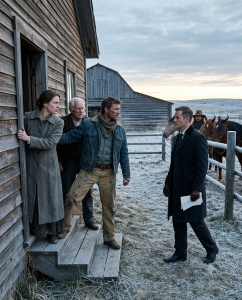
Eli went outside. August followed after a moment, muttering to himself. Cora remained in the doorway, pale but upright.
“There she is,” Webb said when he saw her. “Gather your things.”
“I won’t be coming with you,” Cora said.
The yard went quiet.
Webb tried reason first, or his version of it. He said she had been contracted. That arrangements had been made. That money had changed hands. Cora answered that no paper gave him ownership over her life.
Then Eli spoke.
“She said no.”
The words landed like a gate dropping.
Webb’s pleasant expression thinned. “This is none of your business.”
Eli’s gaze held steady. “It became my business when you rode in here treating a woman like a transaction.”
That was when the mask slipped. Only a fraction. But enough.
Fear moved through Webb’s face before anger did.
Cora saw it too.
She took one slow breath and said, “I know your first wife’s name.”
Every person in the yard stilled.
Webb turned toward her with a dangerous softness. “Be careful.”
“I am,” Cora said. “That’s why I’m still standing here.”
Something had happened before Cedar Fork. That much became clear in the next few minutes, though not all at once.
On the trip west, while waiting overnight at a transfer stop, Cora had overheard two women from the marriage agency speaking in a room they believed was empty. She had caught only fragments at first—Webb’s name, a dead woman, the phrase “no more questions,” and another woman refusing the match after hearing rumors she could not verify. When Cora stepped near the office the following morning, the matron handling her papers would not quite look at her. She shuffled documents too quickly. Pressed too hard. Smiled too brightly.
At the time, Cora had told herself it was nerves.
Now, with Webb standing in Eli’s yard wearing entitlement like a polished boot, the fragments took on a different shape.
“He doesn’t want a wife,” Cora said. “He wants silence.”
One of Webb’s hired men looked at him then—too sharply, too knowingly.
Webb moved at once, fast enough to confirm the accusation before any proof could. He lunged toward the porch as if to stop her from saying more.
Everything broke open.
Eli intercepted him. One rider cursed as his horse sidestepped. August snatched a length of wood from beside the porch and shouted something so forceful it startled even the animals. Cora stumbled back against the doorframe.
Then, from the road, a woman’s voice cut through the chaos.
“Eli Merritt?”
A coach had pulled up at the far gate.
Beside it stood a dark-haired young woman in a city coat, clutching a valise with shaking hands.
Pearl.
The real Pearl.
Her face went white the second she saw Calvert Webb.
That told Eli more than any letter ever had.
Webb swore under his breath. Not because Pearl had arrived late. Because she was alive, present, and terrified.
“Don’t let him near me,” Pearl said.
It was not a request. It was a memory breaking open.
They got everyone inside except Webb and the two men. Eli barred the door while August fetched the shotgun from above the hearth—not pointing it yet, simply letting the sight of it explain the house’s position on trespass. Outside, Webb shouted that he was being slandered. That the women were hysterical. That legal agreements existed. That he would return with the sheriff.
Inside, Pearl sat rigid in a kitchen chair, gloved hands trembling in her lap. Cora knelt beside her. Eli stood by the window. August leaned against the mantel, watching them all with the patience of a man who knew truth often came in pieces first.
Pearl finally spoke.
She had exchanged letters with Eli for months through the agency. Near the end, the agency informed her there had been a “clerical confusion” and asked her to remain one extra day in town while the route was corrected. During that delay, Webb had found her. He introduced himself as the actual intended groom and claimed Eli Merritt had withdrawn. When Pearl hesitated, Webb became persuasive in a way that felt rehearsed. He knew details from her file. He knew her travel arrangements. He knew she was alone.
She had agreed to ride with him only as far as a boardinghouse to verify the situation.
There, she met Webb’s housekeeper.
An older woman with a bruised silence around her.
It was the housekeeper who whispered the warning: leave before dark. Don’t drink anything he offers. Don’t go near the locked room at the end of the upstairs hall.
Pearl fled that same night and found her way back to the agency office. By morning, the matron was suddenly apologetic, suddenly confused, suddenly eager to route Pearl to Eli after all.
“And his first wife?” Eli asked.
Pearl swallowed hard. “People in town said she ran off. But the housekeeper said that was not what happened.”
August’s face turned to stone.
Cora’s mind moved quickly. “The agency knew enough to suspect him and kept sending women anyway.”
“They wanted fees,” Pearl whispered. “And they wanted trouble to go somewhere else.”
Outside, Webb kept shouting.
Then came a new sound.
Wheels.
Another wagon. Then two mounted riders.
Neighbors.
Webb had ridden into Cedar Fork making enough noise that others became curious. Curiosity, in isolated country, often turned into witnesses. Two neighboring ranchers rode in first, then the local feed supplier, then a farm couple from half a mile west who had heard raised voices and came to see whether help was needed.
Webb had counted on privacy. Instead he got an audience.
That shifted him from controlled to reckless.
He demanded entry. Demanded his “lawful bride.” Claimed Eli was harboring stolen property. The more he spoke, the more the onlookers began to understand what sort of man described a woman that way.
Then the final break came from an unexpected place.
One of Webb’s hired men dismounted and said, loud enough for everyone to hear, “You never told us there’d be two women who knew your business.”
The yard went still again.
Webb turned on him with murder in his eyes.
The man stepped back. “You said it was a contract dispute.”
“You were paid to keep your mouth shut.”
That was enough.
In small territories, law was imperfect, but public confession still carried weight. By the time the sheriff arrived—summoned by one of the neighbors riding hard into town—half the county had already heard a version of the story. The sheriff was not eager to act on rumor alone, but he was willing to search Webb’s property once Pearl described the locked upstairs room and once the hired man admitted he had previously helped transport trunks from Webb’s house after “domestic incidents.”
The search turned up more than rumor.
Personal belongings that did not match Webb’s household. Letters never mailed. A ledger of agency fees and side payments. And, buried behind the house beyond a stand of cottonwoods, enough evidence to destroy forever the story that Webb’s first wife had simply run away.
He had not been seeking companionship.
He had been seeking women without nearby family, women easy to isolate, women whose disappearances could be explained as regret, instability, or bad fortune on the frontier. The agency had not known everything, but it had known enough to look away from warning signs in exchange for profit.
Webb was arrested before sundown.
The agency matron was arrested two days later.
The housekeeper, once questioned safely, confirmed the rest.
After that, the story moved quickly through towns and ranches the way truth often does when people realize how close evil came to their own doors. There was outrage, yes. Also shame. Too many had dismissed women’s fear as nerves. Too many had called rumors gossip because it was easier than asking what men like Webb were allowed to do in silence.
Pearl stayed with distant relatives in Bismarck once arrangements could be made. She thanked Eli with visible relief, thanked August with tears, and held Cora’s hands for a long moment before leaving.
“You believed something was wrong before anyone proved it,” Pearl said.
Cora gave a faint, tired smile. “I’ve spent my life noticing damage before it spreads.”
When the wagon carried Pearl away, the yard felt strange in its quiet.
For the first time since her arrival, Cora began gathering her own things.
Eli found her in the small guest room folding the same two dresses she had brought from Sioux Falls.
“What are you doing?” he asked.
“What I came prepared to do,” she said. “Leave once the mistake is corrected.”
He stood in the doorway, saying nothing for a long moment.
The truth was simple and inconvenient. The mistake had been corrected. Pearl had come and gone. The danger had passed. Nothing required Cora Whitfield to remain.
And yet the thought of the house losing her settled in him like a physical blow.
In the few days she had been there, the kitchen had become warmer, not because of fire but because someone used it like a home. The ranch had become sharper, steadier, because someone else could see what needed doing before he said it aloud. August had become insufferably cheerful. Even the silence in the evenings had changed shape.
“You said once you’d stay until I found Pearl,” Eli said.
Cora folded a shawl with careful hands. “I did.”
“She was never the woman I needed.”
Cora looked up slowly.
That was not a polished sentence either. Eli did not possess polished sentences. What he had was the dangerous habit of meaning exactly what he said.
He stepped farther into the room.
“When you walked up from that road,” he said, “I thought you were trouble sent by bad luck. Then you noticed my ditch before my name. You sat at my table like you were trying not to ask for too much. You stood on my porch against a man who frightened you because something in you refused to bend where it shouldn’t.”
His voice lowered.
“You were wrong for the letter. Not for this place.”
Cora stared at him, and for one terrible second he thought she might still leave simply because hope had become too expensive for her to trust.
Then August’s voice bellowed from the kitchen, “If either of you intends to say something life-changing, say it before supper gets cold.”
Cora laughed.
A real laugh this time, startled out of her.
It changed her whole face.
Eli had the absurd thought that he would gladly fight Calvert Webb a second time just to hear that sound again.
She sat down on the edge of the bed because her knees had gone weak, and looked at him with all the caution of a woman who had survived disappointment by expecting it first.
“You told me I wasn’t the woman you chose,” she said.
Eli nodded. “I was wrong.”
“Those are hard words for you, aren’t they?”
“Painful,” he admitted.
That earned him another laugh, softer now.
He crossed the room and took her suitcase from her hands, setting it back down on the floor unopened.
“Stay,” he said.
Not as a bargain. Not as a favor. Not because winter was coming and work was plenty.
Stay because the house felt right with her in it.
Stay because he had looked at a list and asked for traits, when what belonged in a life could arrive in the shape of an interruption.
Stay because wrong roads sometimes delivered the truest thing.
Cora’s eyes filled before she could stop them. She hated crying in front of anyone. It made her feel exposed, young, unsteady. But there are some kindnesses that reach a place in a person too long locked to remain dry.
“Are you certain?” she whispered.
“Yes.”
From the doorway August said, “Good. Because I already told three people in town she was staying.”
Neither of them had heard him approach.
Cora covered her face, half laughing, half crying. Eli turned and said, “Grandpa.”
August shrugged. “I’m old. I move when I please.”
Winter came early that year, but not badly. The south field was saved in time. The ditch was repaired before the freeze. The leaning fence post was replaced. The house filled gradually with signs of Cora’s presence—not frills, not fuss, simply order, warmth, and a steadiness that made everything easier to bear.
By spring, Eli asked her properly.
No agency. No letter broker. No transaction.
Just Eli, awkward in his clean shirt, standing on the porch he had first met her on, asking whether she would build the rest of her life with him.
Cora said yes.
August cried and denied it.
Years later, people still told the story of the wrong bride who arrived by accident and uncovered the truth that saved more than one woman’s life. Some told it as fate. Some called it providence. August called it proof that Eli’s judgment had to fail before his life could improve.
Cora never liked the dramatic versions.
She preferred the plain one.
A driver took the wrong road. A dangerous man came too close. A quiet woman paid attention. An honest man listened.
Still, now and then, when evening light stretched over the fields and wind moved through the repaired fence lines, she would think of that first moment at the crossing. The dust. The cold. The certainty that she had once again been sent where nobody wanted her.
She had been wrong about that too.
And maybe that was the part that lingered longest.
Not that evil had been exposed. Not even that justice had come, though both mattered.
It was the harder question left behind after the danger was over: how many warnings do people ignore because the truth arrives in an inconvenient voice? How many red flags get called misunderstandings until somebody braver names them out loud?
Calvert Webb had counted on silence.
He had nearly found it.
Instead, he found Cora Whitfield at the wrong ranch on the right morning.
And that made all the difference.