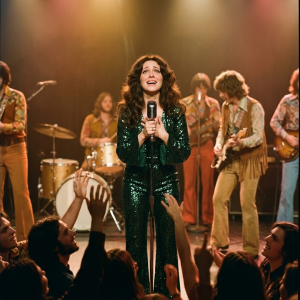
The mayor’s wife made the town librarian serve coffee at the charity gala because her dress looked too plain for the donors.
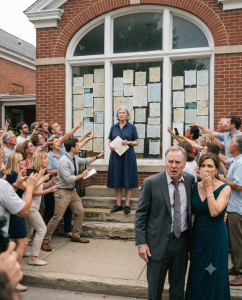
By the next afternoon, half the town was standing outside the public library reading documents that could destroy a mayor, unravel a council, and expose a land deal that had been hidden in plain sight.
What made it worse—for the people who had counted on silence—was that the woman who exposed them was not an activist, a politician, or a rival developer. She was Evelyn Hart, sixty-three years old, gray-haired, soft-spoken, and known throughout Ashby as the librarian who always remembered your name, your favorite author, and whether your grandson liked the dinosaur books or the train books better.
People underestimated Evelyn because she was gentle.
They confused gentleness with weakness.
They confused plainness with invisibility.
And on the night of the Ashby Literacy Gala, that mistake cost them everything.
Ashby was the kind of town that still used the word community in every official speech, every parade flyer, every campaign slogan. It sat between a river and an old highway, with a historic downtown square that looked charming in photographs and slightly worn in person. There were flower boxes on Main Street in spring, a farmer’s market in summer, a winter tree lighting in December. And at the edge of the square, on a corner lot shaded by sycamores, stood the public library.
The building was not grand. It was brick, stubborn, and a little outdated. The roof needed work. The basement smelled faintly of damp cardboard after heavy rain. The children’s section had a mural painted by high school art students twelve years earlier, and one wall still showed the faded outline of an old bookshelf that had been moved. But the place mattered. It mattered to people with nowhere else quiet to go. It mattered to parents who could not afford private tutors. It mattered to job seekers, lonely retirees, children who needed books, and children who needed a reason to stay out of trouble between three and five in the afternoon.
Evelyn had protected that building for twenty-two years.
She knew which shelves leaned, which outlets sparked if overloaded, which board members cared about literacy and which only liked having their names printed in the annual report. She knew exactly how small public institutions survived: not through speeches, but through careful attention, stubborn routines, and a hundred invisible acts no one celebrated.
At six-thirty every morning, she unlocked the side door and turned on the lights one row at a time. She checked returned books, watered the plant in the reading room, and reviewed the day’s programs with a pencil tucked behind her ear. She had taught little kids how to hold a library card like it was a key. She had helped divorced fathers find books their daughters might like. She had shown older patrons how to enlarge the font on public computers and told embarrassed adults, kindly, that struggling to read forms did not make them stupid.
When people thought of Evelyn, they thought of steadiness.
When Celeste Waverly thought of Evelyn, she saw a liability.
Celeste was married to Mayor Daniel Waverly and carried herself like a woman who believed she had improved the town merely by appearing in it. She chaired charity events, sat on museum committees, and gave interviews about “vision” and “revitalization” while wearing dresses that cost more than some families in Ashby spent on groceries in a month. She liked people who photographed well, spoke confidently, and understood how power looked from across a ballroom.
Evelyn, in Celeste’s eyes, looked like old Ashby.
Useful, perhaps. Not impressive.
The gala was held at the Marston Hotel, the fanciest building in town, with chandeliers imported from somewhere European and waiters who had been told to refill champagne before anyone asked. Officially, the event was a fundraiser for local literacy initiatives. Unofficially, it was a networking night for donors, developers, council members, and everyone who wanted to be seen supporting “the future of Ashby.”
Evelyn had not planned to attend. A board trustee called that afternoon in a panic because a guest had canceled. “Please,” he said. “It’ll look strange if the library isn’t represented.”
She almost declined. Gala crowds exhausted her, and she disliked events where wealthy people applauded themselves for caring. But the fundraiser used the library’s name. If people donated in good faith, she wanted to hear what was promised.
So she went home, changed out of her work clothes, and stood before her closet.
Her options were limited. She owned exactly three dresses suitable for formal occasions: one black, one navy, and one burgundy she thought made her look tired. She chose the navy. It fit properly, though fashion had long since moved on without it. She ironed it carefully, pinned on a small silver brooch, brushed back her gray hair, and put on the sensible black shoes she wore whenever she knew she’d be on her feet for hours.
In the mirror, she looked like herself.
To Evelyn, that was enough.
At the hotel entrance, it was not.
Celeste noticed her immediately. Her gaze traveled from Evelyn’s hemline to her shoes and back again with polished contempt.
“Oh,” Celeste said. “I thought the library was sending someone else.”
Evelyn gave her a polite smile. “Good evening.”
The insult might have ended there if Celeste had been satisfied with private cruelty. But public humiliation was more useful. People remember who belongs and who does not when someone enforces the hierarchy in front of them.
A server passed with a tray of coffee cups. Celeste took it smoothly and pressed it into Evelyn’s hands.
“Tonight is full of major donors,” she murmured. “We need the room to look elegant.”
Evelyn blinked, more startled than angry.
Celeste leaned closer. “Stay useful.”
A couple nearby pretended not to hear. One trustee looked down at his phone. Someone laughed at another conversation across the room, and the sound landed like permission.
Evelyn could have refused. She could have put down the tray and left.
Instead, she took a breath and began walking.
Humiliation can ignite some people instantly. Evelyn was not built that way. She absorbed first. She observed. She let the sting settle into something sharper.
She carried coffee to table after table, and the longer she moved through the ballroom, the more invisible she became. Guests barely registered her presence except as a convenience. Their eyes slid past her face and landed on their cups. Their voices stayed loose. Their guards dropped.
By the time she reached table seven, she already understood that being ignored could be a kind of access.
Two men in expensive suits were discussing real estate over the remains of their appetizers.
“Once the library parcel clears, the numbers make sense,” one said. “That corner alone changes the whole development.”
The other gave a quiet laugh. “No one cries forever over old bookshelves.”
Evelyn set a cup beside him, her expression pleasant.
“What about the hearings?” the first man asked.
The second sipped his coffee. “Window dressing. By the time anyone makes noise, permits will be locked.”
Evelyn moved on.
At table nine, Councilman Reed had the flushed confidence of a man who believed secrecy and intelligence were the same thing. A woman in pearls asked him if the vote on the library site would be controversial.
“It would be,” he said, slicing his steak, “if it were actually in doubt.”
She frowned. “You mean it isn’t?”
He smiled in that slippery, superior way public officials sometimes do when they think they are being clever. “I mean the town likes feeling consulted.”
Evelyn nearly stopped walking.
She did not. She simply let the words file themselves where she kept important things.
Near the bar, the mayor’s assistant stood talking to a donor with a red silk pocket square. They were close enough that Evelyn could smell the assistant’s cologne when she leaned in to collect empty cups.
“The reading program transfer was months ago,” he said under his breath.
The donor looked uneasy. “And no one flagged it?”
“Not if it’s buried properly.”
“Buried where?”
He smiled. “In administration.”
It was such an arrogant answer that Evelyn felt something cold settle into place inside her.
For the next two hours, she listened with the focus of someone who had spent decades separating useful facts from harmless gossip. Names. Dates. Account numbers. Parcel references. Casual phrases that became evidence when placed beside public records. One man mentioned a permit revision approved unusually fast. Another joked that public land was “wasted on sentiment.” Someone from the mayor’s office used the phrase “post-vote optics,” which implied there would be no real vote at all.
By the time dessert arrived, Evelyn no longer felt embarrassed.
She felt clear.
Celeste found her near the service hallway and gave her a small nod, as though rewarding obedience.
That was the moment Evelyn decided not just to remember what she had heard, but to prove it.
She left quietly.
Outside, the night air was cool and smelled faintly of rain. Her hands still remembered the weight of the tray. She drove to the library, parked in her usual spot, and let herself in through the side entrance.
The dark inside was familiar and kind. She switched on only the work lights and walked straight to the records room.
Public corruption rarely hides in a single dramatic file. It hides in fragmentation. A memo here, a permit there, a ledger entry no one cross-checks, a board note nobody revisits. People get away with theft and fraud because they count on exhaustion. They count on citizens being busy, overworked, intimidated by paperwork, or convinced that understanding complex records is someone else’s job.
Evelyn had built a career out of helping people read what intimidated them.
She knew where older council packets were archived. She knew which board minutes had digital backups and which existed only in paper binders. She knew the difference between a routine land-use review and a rushed filing slipped into an agenda at the last minute. She knew where the literacy grant reports were stored because she had submitted half of them herself.
She began pulling documents.
A permit application for structural review on the library lot.
A redevelopment map highlighting the exact corner parcel the businessmen had described.
Donation records listing money pledged to the children’s reading program.
Transfer summaries showing funds moved to an administrative holding account.
Internal email printouts from a trustee who had once forwarded everything to the library by mistake and never changed the setting.
She sorted. Compared. Cross-checked.
Around midnight she found the first smoking gun: a draft agreement authorizing preliminary sale terms for the library land dated three weeks before the so-called public consultation process even began.
At one-thirty, she found the second: a financial record showing donor money earmarked for literacy programs redirected into a project account connected to redevelopment consulting fees.
At two-ten, the third: an email thread mocking likely public reaction. Someone had written, They’ll scream for a week and then move on. Another replied, Not if the librarian stirs them up. Handle that first.
Evelyn stared at the screen.
Handle that first.
She printed the thread.
Then she kept going.
Just before dawn, hidden between board correspondence and mayoral scheduling notes, she found a letter drafted on official city stationery requesting that the library board begin “leadership transition planning” for Evelyn due to “image-related concerns tied to future municipal priorities.” Attached was a note in a neat feminine hand: She’s beloved, so do it quietly.
Celeste.
Evelyn closed her eyes for a moment, not from shock but from recognition. Of course it had not been enough to take the building. They had wanted the person who might make people care gone first.
When she opened her eyes, she was no longer tired.
The copy machine ran until sunrise.
Page after page slid out warm and sharp with truth: permits, ledgers, emails, signatures, transfer logs, land agreements. Evelyn made stacks. She highlighted dates in yellow, account numbers in blue, names in pink—just enough to guide the eye of anyone who stopped to read.
At seven-thirty, she taped the first pages to the inside of the front windows.
At eight, she unlocked the doors.
The first person to notice was Noah Becker, a delivery driver who brought supplies to the café across the street. He slowed, squinted at the glass, then stepped closer. Within minutes a mother on the school run joined him. Then two teenagers. Then Mr. Talbot, who came every morning to read the newspaper in the periodicals corner because canceling his subscription had been one of the hardest budget decisions he ever made.
He stood before the window so long Evelyn worried he might be unwell.
Then he whispered, “That’s the mayor’s signature.”
By nine o’clock, photos were already spreading across town.
Ashby was not large enough to contain scandal once it found the right spark. Teachers on prep periods texted screenshots to one another. Shop owners walked out from behind their counters. Parents recognized the names of programs their children had attended. Volunteers recognized donors they had thanked personally. A former municipal clerk saw the parcel number and called her sister in tears because she knew exactly what it meant.
By noon, the street outside the library was full.
People read with the intensity of people realizing they had been counted on not to. They moved from document to document, connecting each line to the next. Someone read the redirected donation totals aloud. Someone else shouted that they had given money specifically for the summer reading program. A father who had brought his son for story hour every Saturday pressed both hands to the glass and said, “They were going to tear this down?”
Reporters arrived with cameras. The mayor’s office began issuing statements about misinterpretation and incomplete context. Nobody cared.
Because the documents were there.
Not rumors. Not accusations. Paper.
And paper, when properly read, is hard to intimidate.
Celeste came first, pushing through the crowd in sunglasses she did not remove quickly enough to hide how rattled she looked. Behind her came Mayor Daniel Waverly, jaw tight, smile fragile, his whole body carrying the energy of a man who had expected control and found public rage instead.
“Evelyn,” he said, using the tone politicians reserve for emergencies. “There has clearly been a misunderstanding.”
She stood on the library steps in the same navy dress she had worn to the gala.
“No,” she replied. “There hasn’t.”
He lowered his voice. “You don’t know how to interpret all of those records.”
A murmur went through the crowd, half disbelief, half laughter.
Evelyn looked at him steadily. “I know how to read.”
It was such a simple answer that it landed like a slap.
The mayor started talking about revitalization, economic opportunity, strategic transitions. The words sounded expensive and empty in the open air. Behind him, people kept reading. That was the part he could not interrupt. Every sentence out of his mouth had to compete with the visible evidence taped to the glass behind Evelyn’s shoulder.
Then Celeste made her mistake.
“You had no right to do this,” she snapped.
That turned the crowd.
A woman near the curb shouted, “No right? It’s a public library!”
Another voice yelled, “It’s public land!”
Mr. Talbot, normally gentle to the point of shyness, stepped forward and tapped one of the donation ledgers on the window. “Read the account number,” he said.
Three former bank employees in the crowd did exactly that. One of them looked up sharply and said the holding account was attached to Marston Redevelopment Holdings—the same company represented by one of the businessmen Evelyn had served coffee to the night before.
At that exact moment, one of those businessmen arrived at the edge of the crowd, saw the document, and stopped dead.
The reaction was immediate. People turned. Phones lifted. A reporter called out his name. He backed up a step, then another, and in doing so confirmed more than any statement could have.
Mayor Waverly tried again. “These are preliminary documents, not final actions.”
Evelyn reached into her coat pocket.
The crowd quieted.
She unfolded the one page she had held back all morning.
It was the letter ordering the board to remove her before the redevelopment announcement, accompanied by Celeste’s handwritten note: She’s beloved, so do it quietly.
A sound went through the crowd—not a shout at first, but the stunned intake of a town watching private contempt become public fact.
Then the shouting started.
“They were going to fire her?”
“They planned this!”
“They stole from the children’s program!”
One of the library trustees, pale and sweating, said weakly that he had only seen a draft and had assumed nothing would happen without public process. No one looked sympathetic. Another council member tried to slip toward the alley and was intercepted by two reporters before he got ten feet.
The police chief arrived with two officers, took one look at the windows, and stopped trying to control the crowd long enough to call the county investigator himself.
By late afternoon, the state ethics office had been notified. The local paper ran a digital headline naming the library documents as the source of the scandal. By evening, Mayor Waverly announced he would “temporarily step aside pending review,” which nobody believed was voluntary. Councilman Reed resigned before sunrise the next day. The redevelopment company denied wrongdoing for almost forty-eight hours, until bank records began surfacing that made denial impossible.
The children’s reading fund had indeed been siphoned off. The public vote had been manipulated through back-channel commitments made before hearings were scheduled. The library site had been promised to developers before residents were ever invited to comment. And Celeste, who had dismissed Evelyn as decorative staff, had helped plan the removal of the only person in town likely to understand both the records and the community well enough to expose the scheme.
The fallout was brutal.
Subpoenas followed. Phones were seized. Trustees turned on one another. Donors demanded refunds and explanations. One businessman from table seven agreed to cooperate once he realized he was not protected. The mayor eventually faced charges tied to fraud, misconduct in office, and falsification of public records. Councilman Reed accepted a plea deal. Celeste was never criminally charged, but the released correspondence destroyed her social standing so completely that she left Ashby within the year.
The library, meanwhile, stayed exactly where it was.
Not because powerful people suddenly grew consciences, but because the town would not let go.
Residents packed council meetings for months. Volunteers raised emergency repair money. A retired contractor organized free labor for roof work. The high school art class repainted the children’s mural. Parents brought cookies to the staff room. Someone started a scholarship fund in Evelyn’s name for students pursuing library science or public service. Donations poured into the children’s reading program—real donations this time, tracked publicly, updated weekly, impossible to hide.
When the board asked Evelyn if she wanted to retire after everything that had happened, she looked around the reading room at the scuffed chairs, the patched carpet, the row of children’s backpacks lined against the wall during after-school hours, and said, “No. I think I’ll stay.”
And she did.
The first Saturday after the scandal broke, story hour was fuller than it had been in years. Parents stood along the back wall because all the chairs were taken. Mr. Talbot came early and saved a seat for a little boy who liked trains. At the end, one of the children asked Evelyn if bad people were gone now.
She smiled in that thoughtful way she had.
“Some are,” she said. “But the important thing is that people paid attention.”
That became the lesson people remembered.
Not just that corruption had happened, though it had. Not just that the mayor’s wife had humiliated the wrong woman, though she certainly had. What Ashby remembered was the deeper embarrassment: that the truth had been available in fragments for months, and most people had been too busy, too trusting, or too intimidated to read closely enough to see it.
Evelyn had.
Because that was what she had always taught.
Read the form before signing it. Read the source before sharing it. Read the fine print. Read the minutes. Read the names. Read the numbers. Read what powerful people hope you will skip.
Years later, people still told the story in slightly different ways. Some emphasized the gala and the cruelty of the tray pressed into Evelyn’s hands. Some focused on the windows covered in documents. Some swore the turning point was the moment the mayor told a librarian she did not know how to interpret records and half the town laughed in his face.
But nearly everyone ended the story the same way.
They made the librarian serve coffee because they thought she looked too plain to matter.
Then she taught the whole town how dangerous a quiet woman can be when she knows how to read.
Even now, that ending leaves people with the same uneasy question.
If they had not humiliated her so openly, would anyone have looked closely enough to stop them?
And maybe the more uncomfortable one:
How many other lies survive every day just because no one bothers to read past the first page?