Nina replayed the first sentence twice before she could make herself keep listening.
“If you’re hearing this, then Marsha either died, left, or finally ran out of people to fool.”
The words came through tape hiss and age-warped static, but the fear in her father’s voice had survived perfectly.
Nina sat motionless on the edge of the armchair in her rental living room, the old cassette player balanced on a stack of unopened mail, her hand locked over her mouth. The room was small and dim, the late evening light turning the cheap blinds gray. Nothing about it felt big enough to hold what she was hearing.
Her father had been dead for two years.
For most of those two years, she had told herself she was done with the farm, done with Marsha, done with all the unfinished ugliness that followed his death like dust after a truck on a gravel road. She had moved forty minutes away, taken a bookkeeping job at a feed supplier, and trained herself not to look down the county highway that led back toward the place where she grew up.
Then six months ago, the bank called about a lockbox fee tied to an account that had finally matured. She nearly ignored that too. It took three separate notices and one guilty Saturday afternoon before she drove out to collect it.
The key had opened a narrow metal box holding exactly the kind of things she feared most: old family photographs, a sealed letter from attorney Ben Larkin, and a cassette tape labeled in her father’s blocky handwriting.
FOR NINA ONLY
She had shoved the whole thing into a kitchen drawer when she got home.
Now, after weeks of telling herself she would listen when she was ready, she was discovering there was no such thing as ready.
On the tape, her father cleared his throat.
“I should’ve told you sooner. I should’ve told you before the accident. Truth is, I thought I still had time to fix it without making you carry what I’d done.”
Nina closed her eyes. Her father had never been a man of dramatic speeches. He apologized in feed sacks stacked before a storm, in fence repairs done before sunrise, in gas tanks he quietly topped off. If he was saying these words out loud, it meant the truth had cornered him before death did.
He told the story the way scared people often do: circling the heart of it without touching it all at once.
Marsha, he said, had entered the marriage carrying debt. He knew she had some. He had not known the scale. First there were small loans she brushed off as old business obligations. Then private notes. Then “bridge money” from friends of her brother Russ. Then collection calls, coded at first, then bolder. One man had called the house three times in one week asking for confirmation of assets, then hung up when Nina answered.
Her father said that by then he should have realized what kind of trouble he was living beside.
Instead, he kept hoping it would settle.
It never did.
After Nina’s mother, Elsie, died, a life insurance payout came in. Not huge, but enough to draw the wrong kind of attention. Marsha immediately started talking about restructuring debt, freeing up cash, “leveraging property.” She pushed for a second mortgage against the farm.
He refused.
That refusal, Nina realized as she listened, had probably been the last clean line her father ever held.
Because Marsha found another way.
Three acres along the south boundary had been left in legal limbo after Nina’s grandmother died. The survey was old. The probate transfer had never fully closed. Elsie had meant to fix it, but then came doctor visits, then treatments, then funeral clothes and casseroles and the numb years that follow grief. Everyone always assumed they would get around to it.
They never did.
Until Marsha did.
Nina could still picture that tract clearly. Slightly lower than the rest of the field, edged by willow and scrub oak, with a narrow irrigation cut that fed the west side during dry weeks. It didn’t look important. That was exactly why it was.
On the tape, her father’s shame seemed to thicken the air.
“I found out she’d used the land as collateral after the bank notice came. We fought. Worst fight we ever had.”
Nina didn’t have to imagine that fight. She could hear echoes of it in memory. A cabinet slamming. Her father’s voice raised only once, which had always meant danger. Marsha’s voice level and vicious, the way it got when she knew rage would make the other person look unstable first.
“She said if I exposed the loan, they’d come after the whole farm,” he continued. “Said the only way to keep the house was consolidate everything, refinance under her brother’s contact, and buy time.”
Russ.
Nina whispered his name aloud before she even realized she had.
Russ Delaney was one of those men who made everyone uneasy for reasons they struggled to explain. Well dressed without being successful enough to account for it. Familiar with county clerks, appraisers, and anyone who handled signatures. Always joking, always touching papers that didn’t belong to him, always acting like rules were for people who lacked imagination.
He had once picked up one of Elsie’s old file folders from the kitchen table, flipped through it without permission, and said, smiling, “Half the world belongs to whoever bothers to understand documents.”
Elsie had taken the folder back and replied, “The other half belongs to people decent enough not to steal it.”
Nina had loved her mother for that.
She wondered now if Marsha and Russ had hated her for it.
The tape clicked.
Then came the sentence that split Nina’s life into before and after.
“The tractor accident wasn’t an accident.”
Her whole body snapped upright.
The cassette hissed on, indifferent.
“I can’t prove it. But the brake line had been cut halfway through. Mechanic told me quiet because he didn’t want trouble. Said maybe it frayed, but he wouldn’t bet on it. I didn’t tell the sheriff because by then I was scared of what else I’d find.”
Nina stared at the machine as if it had grown teeth.
The tractor accident had happened sixteen months before her father died. He survived the rollover, but the recovery was ugly. His shoulder never healed right. His ribs gave him trouble in cold weather. More than that, something inside him had changed. He became watchful, distracted, reluctant to argue with Marsha in public. Everyone said trauma did that. Nina had believed them.
Now memory pulled old moments into a different shape.
Marsha standing at the hospital bedside in a pressed blouse, tearful but composed.
Marsha telling visitors how lucky they all were.
Marsha answering questions before her father could.
Marsha insisting she would “handle the paperwork” because stress was bad for recovery.
There had been lasagna in the freezer, sympathy cards on the counter, and somehow, beneath all of it, a transfer of control nobody fully tracked in real time.
Her father’s voice broke.
“I signed the transfer after that because I thought she’d kill the place before she let me keep it from her. But I never meant to let it stay hers. Ben Larkin drew a trust amendment naming you. It’s not in the house. It’s with what I hid in the pump account.”
Pump account.
Not pump house. Not irrigation shed.
Pump account.
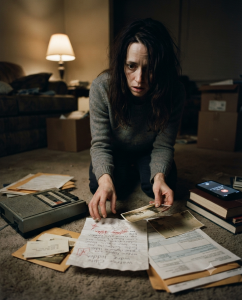
Nina dropped to the floor and tore open the rest of the lockbox envelope with shaking hands. Papers slid out across the rug. A deposit slip from Farm & County Savings. Several old photos. Ben Larkin’s letter. One account title was circled in red ink:
WH-IRR REPAIR HOLDING
At first glance it looked like the kind of boring maintenance account any farm might keep. Something for irrigation repairs or parts. Something no one would bother to question unless they understood why it existed.
A rusty paper clip held a note to the slip.
Not the farm. The water rights.
Nina read it twice, then a third time, because her mind resisted the meaning.
Land could be sold. Buildings could be signed away. Fences moved. Surveys challenged. Deeds manipulated.
Water rights were something else.
In that county, water was life. It was not just a utility. It was value itself. Without secure irrigation access, a farm was only dirt waiting to fail. The vineyard company that had bought the property after Marsha’s sale had spent the last year tearing out old rows, planting new varietals, installing drip systems, and advertising an expansion project in the local paper. They weren’t buying nostalgia. They were buying production.
And if her father had separated the water rights before Marsha pushed the transfer through, then she may have sold them a property whose most essential operating rights had never gone with the deed.
Nina grabbed Ben Larkin’s letter and unfolded it.
Larkin had been ancient even when she was a teenager. A lawyer who wore suspenders, hated computers, and distrusted anybody too charming. The typed letter was cautious, formal, maddeningly sparse. It referenced a holding account, a trust amendment, and “supporting instruments subject to secure filing.” At the bottom, below the typed signature, Larkin had handwritten a note:
Do not contact them until record copy is secured.
Them.
Not her.
Them.
Marsha was not alone in this.
Nina went still.
Outside, someone slammed a car door in the street. She flinched so hard the cassette player clicked and almost stopped. Her nerves were raw now, every sound amplified.
She looked back down at the papers and noticed something tucked behind the letter: a faded photocopy with the county seal in one corner and survey references down the side. Near the bottom, in cramped legal language, were the words beneficial use reservation pending transfer.
She felt the room tilt.
It was a filing trail.
Not a final deed, not by itself. But evidence. A path. Proof that something had been carved out before the larger transfer.
There was also a word written diagonally across the photocopy in dark slanted ink.
VOID.
The mark was unofficial. Angry. Designed to intimidate, not legally cancel. Nina knew the difference. Russ had once crossed out valid equipment receipts from Elsie’s records and declared them obsolete until no one had energy left to challenge him.
This was the same kind of move.
Hide the truth in confusion.
Then her phone buzzed.
Unknown number.
Before she answered, a voicemail alert appeared.
She pressed play.
A woman’s voice filled the room, calm and cold.
“Some things are old for a reason, Nina. Digging them up won’t bring your father back. It’ll only make expensive trouble for people who can afford more of it than you can.”
Marsha.
Nina stopped breathing for one beat, then another.
She had told no one about the tape. No one about the lockbox. No one about the papers on the floor.
Which meant someone was watching for movement around the account, the box, or Ben Larkin’s office records.
Fear came first. Then, beneath it, anger so clean it steadied her.
Marsha wanted her afraid. Russ always wanted people confused. Men like Russ and women like Marsha lived on one assumption: that decent people would be too tired, too underfunded, too polite, or too heartbroken to force the truth into daylight.
Nina looked around her cramped rental. Cheap lamp. Stack of bills. Dented filing cabinet from a yard sale. There was nothing impressive in the room. Nothing that suggested power.
But she knew records.
Bookkeeping had taught her the thing her father and mother had always known in other ways: systems only looked invincible until you found the number they were hiding.
She sat back down at the coffee table and made herself think.
First, secure copies.
Second, locate Larkin or his archives.
Third, identify whether the water rights reservation had ever been recorded fully or was only waiting to be finalized.
Fourth, do not alert the vineyard owners until she understood whether they were complicit, negligent, or simply the newest victims.
And fifth, listen to the rest of the tape.
She turned the cassette over.
Side B began with a few seconds of static. Then her father spoke again, quieter than before.
“If she thinks this is only about debt, she’ll keep lying. If Russ thinks it’s only about title, he’ll keep moving paper. But if anything happens to me after this, you need to know the one part they were both scared of.”
Nina leaned closer.
“On July twelfth, I met Russ at the pump shed because he said he had the corrected transfer packet. He wasn’t alone. The buyers’ representative was there early. I heard enough before they saw me. Russ said, ‘As long as the water reservation dies in review, the rest won’t matter.’ Then Marsha told him to stop saying it out loud.”
Nina’s hand tightened around the tape player.
The buyers’ representative.
So the vineyard company might not be innocent after all.
Her father continued, voice rough with effort.
“I kept a copy of the preliminary reservation because Ben said never trust a man who rushes filings. If they say there isn’t one, they’re lying. If they say it expired, make them prove how.”
There was a pause, a shuffling sound, then one final blow.
“The mechanic who checked the tractor told me he saw Russ’s truck near the equipment shed the night before the brake failure. He won’t testify unless cornered. Said he has his own liabilities. But he knows.”
The tape ended there.
No goodbye. No “I love you.” No neat closure.
Just the truth, dropped into her lap like live wire.
Nina sat in silence for a long time. The kind of silence that feels loud because your entire life is rearranging itself inside it.
Her father had been right about one thing: this was not only about debt. It was about leverage, fear, and a plan that depended on everyone staying isolated. Marsha had debt. Russ had documents. The buyers had money and incentive. Together, they had created something that looked legal from the outside and rotted underneath.
Nina began making calls the next morning.
Ben Larkin was alive, though retired and furious at being interrupted before breakfast. He denied everything until she read his handwritten line back to him word for word. Then he went quiet and told her to drive out immediately with every paper she had.
His office smelled like dust, coffee, and carbon copies. He spread the documents across a scarred oak table and put on thick glasses. As he read, his mouth hardened.
“They marked this void?” he muttered. “Of course they did.”
“Is it real?” Nina asked.
He looked up. “Oh, it’s real.”
The water rights reservation, he explained, had been prepared as a protective carve-out attached to a trust amendment after her father discovered Marsha’s collateral scheme. The intention was clear: even if title to the land became compromised under pressure, the beneficial irrigation rights tied to the core producing acreage would remain under the trust for Nina unless properly released.
“Was it filed?” she asked.
“Partially. Enough to create a trail. Not enough to survive tampering without support,” he said. “I was waiting on one final supporting instrument and your father started backing away. He was frightened. Then came the accident.”
Nina swallowed. “Can we prove it now?”
Larkin opened an old ledger, then another drawer, then a locked archive cabinet. Inside was a duplicate record copy and a courier receipt no one had destroyed.
“Yes,” he said. “Now we can.”
What followed moved faster than Nina expected and slower than she wanted. Larkin petitioned for record confirmation and preservation. Nina’s bookkeeping experience helped unravel account movements connected to the irrigation holding fund. A quiet title dispute became an emergency legal challenge the moment water access was linked to current vineyard operations.
The vineyard company denied prior knowledge.
Then one of their emails surfaced.
Not a confession. Not clean. But enough.
A representative had written to Russ before closing: Need assurance the irrigation reservation issue is dead. Investors won’t tolerate ambiguity.
There it was.
Not ignorance. Not innocence. Calculated risk.
Once legal pressure mounted, the mechanic broke too. He didn’t testify to seeing Russ cut a brake line. He testified to seeing Russ’s truck where it should not have been, at a time no one had ever mentioned, and to being told afterward that some things were “better left as bad luck.”
It was not enough to prove attempted murder in court. But it was enough to tear the halo off the accident story and drag suspicion into the open where Marsha had spent years making sure it never stood.
Marsha herself tried to settle.
She sent an offer through attorneys first. Then a larger one. Then a final desperate proposal to let the vineyard retain full water access under permanent lease in exchange for money, silence, and a nondisclosure agreement.
Nina refused all of it.
The confrontation happened three months later in a mediation room colder than any barn she had ever stood in.
Marsha looked older, but not softer. Russ looked smaller without his easy grin. The vineyard’s legal team kept shuffling paper as if paper could still save them.
Marsha leaned across the table once and said quietly, “Your father signed.”
Nina held her gaze and answered, “Because he was afraid of what you’d do next.”
For the first time, Marsha had no polished reply.
The final resolution was ugly, expensive, and public enough to stain everyone involved. The court recognized the preserved reservation and the trust interest tied to Nina. The vineyard retained temporary operational use only under emergency negotiated terms while a new agreement was forced into place. They paid heavily for continued access. Marsha’s sale proceeds were clawed back in part through fraud claims. Russ was pulled into separate civil exposure over misrepresentation and document interference.
No one went to prison for the tractor accident. That truth remained half-buried, legally speaking.
But the official story died.
And in that county, sometimes that mattered almost as much.
The farm itself did not return to Nina whole. By then too much had changed. Too many hands had touched it. Too many rows had been replanted into something her parents never intended. But the water rights did. The leverage did. The one thing everybody thought had slipped quietly away turned out to be the one thing her father had managed to save.
Months later, Nina stood at the south boundary in the fading light, looking over the low tract everybody once treated as an afterthought. Willow leaves moved in the evening wind. Somewhere nearby, water ran through pipe with that steady hidden sound people stop hearing until it is gone.
She thought about Elsie, who had always said unfinished paperwork was how families lost things they thought love alone would protect.
She thought about her father, who had failed her in ways that could never be fully cleaned up, and still, at the very end, had tried to leave her the only piece that mattered.
She thought about Marsha, who had mistaken fear for surrender.
Maybe that was the red flag all along: not the debt, not the perfume, not even Russ with his smiling hands on other people’s papers. Maybe it was the way Marsha always spoke about survival as if it excused every betrayal that came after.
Nina still didn’t know whether her father deserved forgiveness.
She knew he had hidden too much for too long. She knew cowardice had cost them all. But she also knew that in a house full of lies, he had preserved one narrow path back to the truth and trusted her to find it.
Standing there, listening to the water move beneath land that had almost been stolen clean, Nina understood something she hadn’t when she first pressed play on the tape.
The farm was never the real inheritance.
The truth was.
And once it surfaced, everyone who had built a future on silence had to learn the same lesson at once: the most dangerous thing in the room was never the deed they were holding.
It was the one record they failed to kill.